
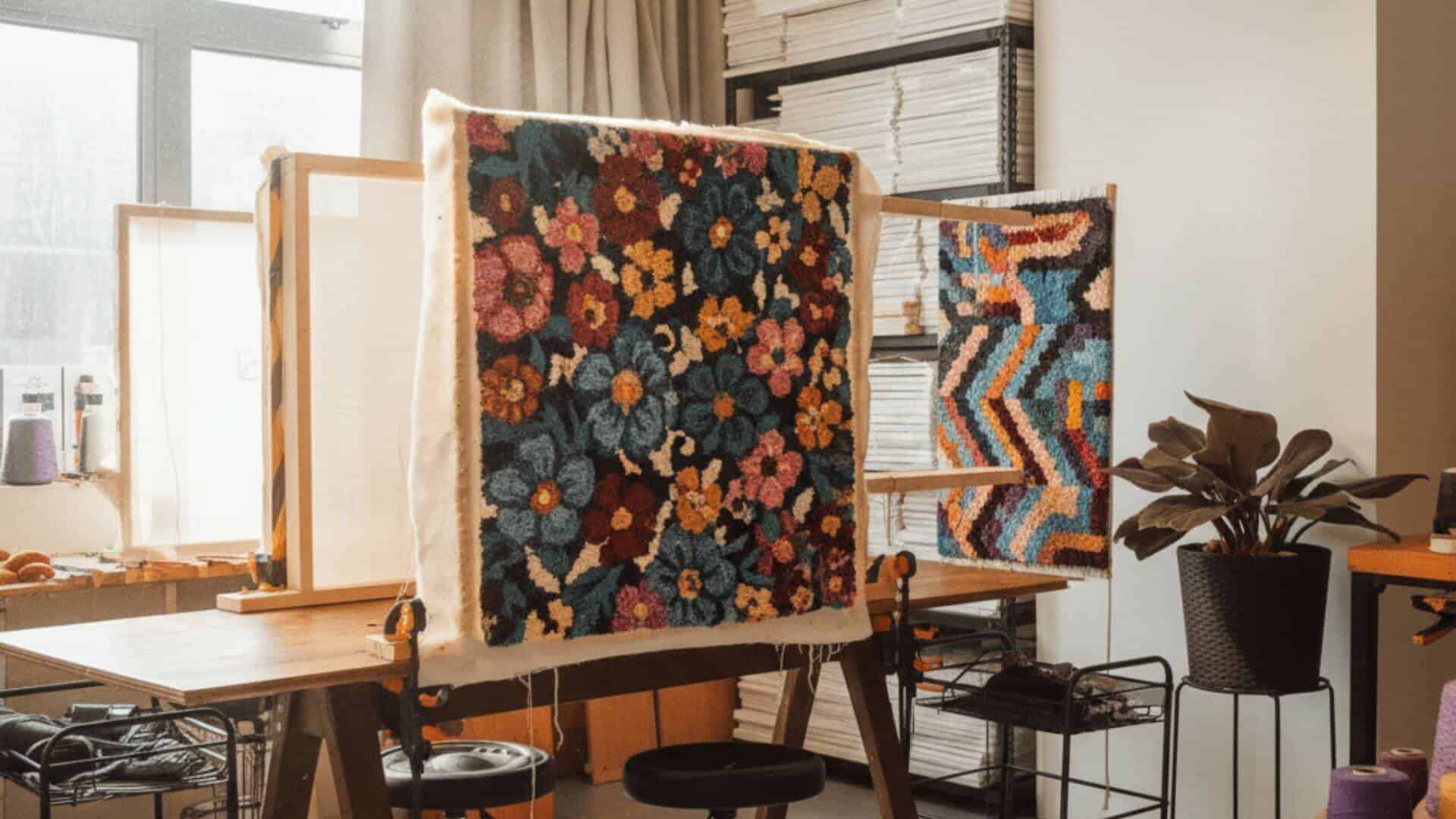
Choosing the right tufting frame comes down to three things: the size of rugs you want to make, the amount of space you have, and how much you want to spend. Your frame also needs to hold your tufting cloth tight while you work, so stability matters.
In this guide, I’ve compared the best tufting frames by size, construction, setup, included features, and value to help you narrow down the best option for your setup.
If you’re just getting started, a smaller frame can be easier to fit into a home workspace, while a larger frame gives you more room as your projects grow.
Quick Answer:
Best for beginners:
Compact aluminum frame – smaller footprint for a first setup
Best for most home setups:
55.2″ aluminum frame – more working area without jumping to an oversized frame
Best for larger projects:
64″ frame – extra working area for bigger rug designs
Getting the right frame is only part of the setup.
Proper fabric tension is just as important for clean, even stitches.
Learn how to stretch fabric correctly on your frame →
Don’t Overthink It
If you’re just starting, go with a compact aluminum frame. It gives you enough working area to learn without overwhelming your setup.
You can always upgrade later once you start making larger rugs.
Best Tufting Frame for Beginners (Start Here)
If you are unsure which frame to choose, this compact 27.5-inch option is a good place to start.
Its smaller size makes it suitable for learning on smaller rug projects without requiring a large dedicated workspace. The aluminum frame also includes clamps for attaching it to a table or work surface.
27.5″ Aluminum Tufting Frame
This compact aluminum tufting frame is a practical option for a smaller workspace. Its 27.5-inch size gives beginners room for smaller rug projects without starting with an oversized frame.
Best for: small rugs, wall art, limited workspaces, and first tufting setups
View on AmazonBest Compact Upgrade
If the 27.5-inch beginner frame feels a little too compact, this 35.5-inch NODOCA gives you a step up in working area without jumping to one of the much larger frames.
Its aluminum construction and intermediate size make it a practical option for a home setup where you want more room for your designs but still need to be mindful of space.
NODOCA 35.5″ Aluminum Tufting Frame
This 35.5-inch frame sits between the compact 27.5-inch option and the larger 55.2-inch NODOCA, giving you another size choice based on the projects you plan to make.
Best for: smaller to medium rug projects, home workspaces, and makers who want more room than a compact beginner frame.
View on AmazonBest Adjustable Tufting Frame
Pinkart Adjustable Aluminum Tufting Frames
Pinkart offers two adjustable aluminum frame options for different setups. Both allow you to adjust the width and height of the frame, while the larger 35.5-inch version adds a gravity-balancing hanger designed to help support the weight of the tufting gun while you work.
27.6″ Adjustable Frame: A smaller, lower-priced option with clip-style fabric fixation for makers who want an adjustable aluminum setup.
35.5″ Gravity Balancing Frame: The larger version includes a gravity-balancing hanger system designed to help support the tufting gun and reduce pressure on the wrist and arm during longer tufting sessions.
Extra 5% off: Use code 7R23IVSM at checkout on eligible Pinkart frames.
Disclosure: I may earn a commission from qualifying purchases made through these links.
Not sure what to make first?
See Beginner Tufting Patterns →
Best Mid-Size Tufting Frame
If you want more working room than a compact beginner frame provides, a mid-size frame is a natural next step.
The 55.2-inch size gives you more space for larger rug designs without moving all the way up to an oversized frame, making it a practical option for a home tufting setup.
NODOCA 55.2″ Aluminum Tufting Frame
The 55.2-inch NODOCA frame gives you considerably more working area than the compact 27.5-inch option, making it better suited to larger designs while still being a reasonable size for a home tufting setup.
Best for: medium to larger rug projects, makers who want more working area, and upgrading from a smaller frame.
View on AmazonQuick Picks (Choose Based on Your Setup)
Best for Beginners:
27.5″ Aluminum Tufting Frame
Best for Small Spaces:
35.5″ Aluminum Tufting Frame
Best Mid-Size:
NODOCA 55.2″ Aluminum Tufting Frame
Best for Large Projects:
NODOCA 64″ Aluminum Tufting Frame
Best Wooden Option:
BESGEER 35.5″ Wooden Tufting Frame
Best Large Wooden Option:
BESGEER 78.7″ × 59″ Large Wooden Tufting Frame
Best Tufting Frame for Large Projects
For larger rug designs, a bigger frame gives you more working area so you are not as restricted by the dimensions of a smaller setup.
At 64 inches, this NODOCA is the largest aluminum frame in this roundup and is better suited to makers who want room for larger projects.
NODOCA 64″ Aluminum Tufting Frame
This 64-inch NODOCA provides considerably more working area than the smaller frames in this guide, making it an option for larger rug designs and more spacious work areas.
Best for: larger rug projects, bigger designs, and workspaces with room for a full-size frame.
View on AmazonBest Wooden Tufting Frame
If you prefer a traditional wooden setup instead of an aluminum frame, this BESGEER 35.5-inch frame gives you another option.
It also includes tufting cloth, which can be convenient if you’re putting together a new setup and don’t already have fabric ready to use.
BESGEER 35.5″ Wooden Tufting Frame
This 35.5-inch wooden frame is a good alternative if you prefer a more traditional frame setup instead of aluminum.
It also includes tufting cloth, which can be useful if you’re building a new setup and do not already have fabric ready to use.
Best for: makers who prefer a wooden frame, medium-size rug projects, and new setups that can benefit from included tufting cloth.
View on AmazonBest Large Wooden Tufting Frame
If you want the working area of a much larger frame but prefer a wooden setup, this BESGEER is worth considering.
At approximately 78.7 × 59 inches, it offers considerably more working space than the 35.5-inch wooden frame and is better suited to larger rug designs and workspaces with room for a freestanding setup.
BESGEER 78.7″ × 59″ Large Wooden Tufting Frame
This large wooden frame gives you significantly more working area than the smaller BESGEER option, making it a better fit when project size is the priority.
Best for: large rug designs, dedicated workspaces, and makers who prefer a large wooden frame.
View on AmazonQuick Comparison: Best Tufting Frames
| Frame | Best For | Why Choose It | Action |
|---|---|---|---|
| 27.5″ Aluminum Frame | Beginners, smaller projects, limited space | Smallest option in this guide and easier to fit into a compact workspace | View On Amazon |
| NODOCA 35.5″ Aluminum Frame | Smaller to medium rugs, home setups | More working area than the 27.5″ frame without moving to a much larger size | View On Amazon |
| NODOCA 55.2″ Aluminum Frame | Medium to larger rug projects | Mid-size option with more room for larger designs | View On Amazon |
| NODOCA 64″ Aluminum Frame | Large rugs, bigger workspaces | Largest aluminum frame in this roundup | View On Amazon |
| BESGEER 35.5″ Wooden Frame | Makers who prefer wood, medium-size projects | Wooden alternative that includes tufting cloth | View On Amazon |
| BESGEER 78.7″ × 59″ Large Wooden Frame | Large rugs, dedicated workspaces | Much larger working area in a wooden frame | View on Amazon |
Not sure which to pick?
Start by thinking about the size of the rugs you want to make, how much workspace you have, and whether you prefer an aluminum or wooden frame. The 27.5″ frame is the most compact option in this guide, while the 35.5″ and 55.2″ aluminum frames give you progressively more working area. For larger projects, consider the 64″ NODOCA aluminum frame or the 78.7″ × 59″ BESGEER if you prefer a large wooden setup.
Aluminum vs. Wooden Tufting Frames
Aluminum and wooden tufting frames can both work well, but they offer different types of setups.
Aluminum frames are available in a range of sizes and can be a convenient choice if you want a ready-made frame rather than building one yourself. When comparing aluminum options, pay attention to the working dimensions, how the frame attaches to your work surface, and whether the size fits comfortably in your workspace.
Wooden frames offer a more traditional setup and can also be purchased ready-made or built yourself. If you choose wood, consider the overall dimensions, how the tufting cloth attaches to the frame, and whether you want a tabletop or freestanding setup.
Neither material is automatically the best choice for everyone. The better option depends on your available space, preferred project size, and whether you want a ready-made frame or a DIY setup.
DIY Tufting Frame (Best for Custom Sizes and Budget)
If you want maximum control over size and cost, building your own frame is a strong option.
→ See the DIY tufting frame blueprint
Core materials:
- 2×4 lumber
- screws and brackets
- carpet tack strips
Building your own frame also gives you more control over the dimensions, which can be useful if you have a specific rug size or workspace in mind.
How to Choose the Right Tufting Frame
Not all tufting frames are the same. The right choice depends on your space, the size of rugs you want to make, and how you plan to use your setup.
Table-Mounted Frames
Table-mounted frames are a practical choice when you have limited floor space or don’t want a permanent freestanding setup. They attach to a sturdy work surface and are commonly available in sizes suited to smaller and medium projects.
Best for: smaller workspaces, beginners, and smaller to medium rug projects.
Large Aluminum Frames
Larger aluminum frames give you more working area for bigger rug designs. They can make sense once smaller frames begin limiting the size of projects you want to create, but they also require considerably more workspace.
Best for: larger rugs, dedicated workspaces, and makers ready to move beyond a compact setup.
Table-Mounted vs. Large Tufting Frames
| Feature | Table-Mounted Frame | Large Frame |
|---|---|---|
| Space required | Less | More |
| Typical project size | Small to medium | Medium to large |
| Setup | Attaches to a work surface | Requires more dedicated space |
| Portability | Easier to move/store | Less portable |
| Best for | Smaller spaces and first setups | Larger projects and dedicated workspaces |
Which Tufting Frame Should You Choose?
- Choose a table-mounted frame if you have limited space or plan to make smaller projects.
- Choose a larger frame if you want more working area for medium to large rug designs.
- Consider a DIY frame if you want to customize the dimensions for your workspace or projects.
If you’re unsure, start with the frame size that fits the projects you plan to make now. You can always move to a larger setup later.
Compare All Tufting Tools
Common Beginner Tufting Frame Mistakes
- Choosing a frame that doesn’t provide enough working area for the projects you want to make
- Setting up the frame on a work surface that isn’t sturdy enough
- Not stretching the tufting cloth evenly across the frame
- Starting with a frame that’s larger than your available workspace can comfortably handle
Taking a little extra time to choose the right frame size and stretch your tufting cloth evenly can make the setup much easier to work with.
Best Tufting Frames FAQs
There isn’t one ideal size for every beginner. A smaller frame can be easier to fit into a home workspace, while a larger frame gives you more working area. Consider the size of rugs you want to make and the amount of space you have available.
Buying a pre-made frame can simplify the setup process, while building your own gives you more control over the dimensions. The better choice depends on your budget, workspace, tools, and whether you want a custom-sized frame.
Tufting cloth can loosen if it wasn’t stretched evenly during setup or if it needs to be repositioned and tightened as you work. Check the tension across the frame and make adjustments before continuing.
Final Thoughts
The right tufting frame depends on the size of projects you want to make, your available workspace, and whether you prefer a ready-made or DIY setup.
For smaller projects and limited spaces, a compact frame can be a practical place to start. If you need more working area, a mid-size or larger frame gives you more room for bigger designs.
Whichever option you choose, make sure the frame fits your workspace and gives you enough working area for the rugs you actually want to create.