
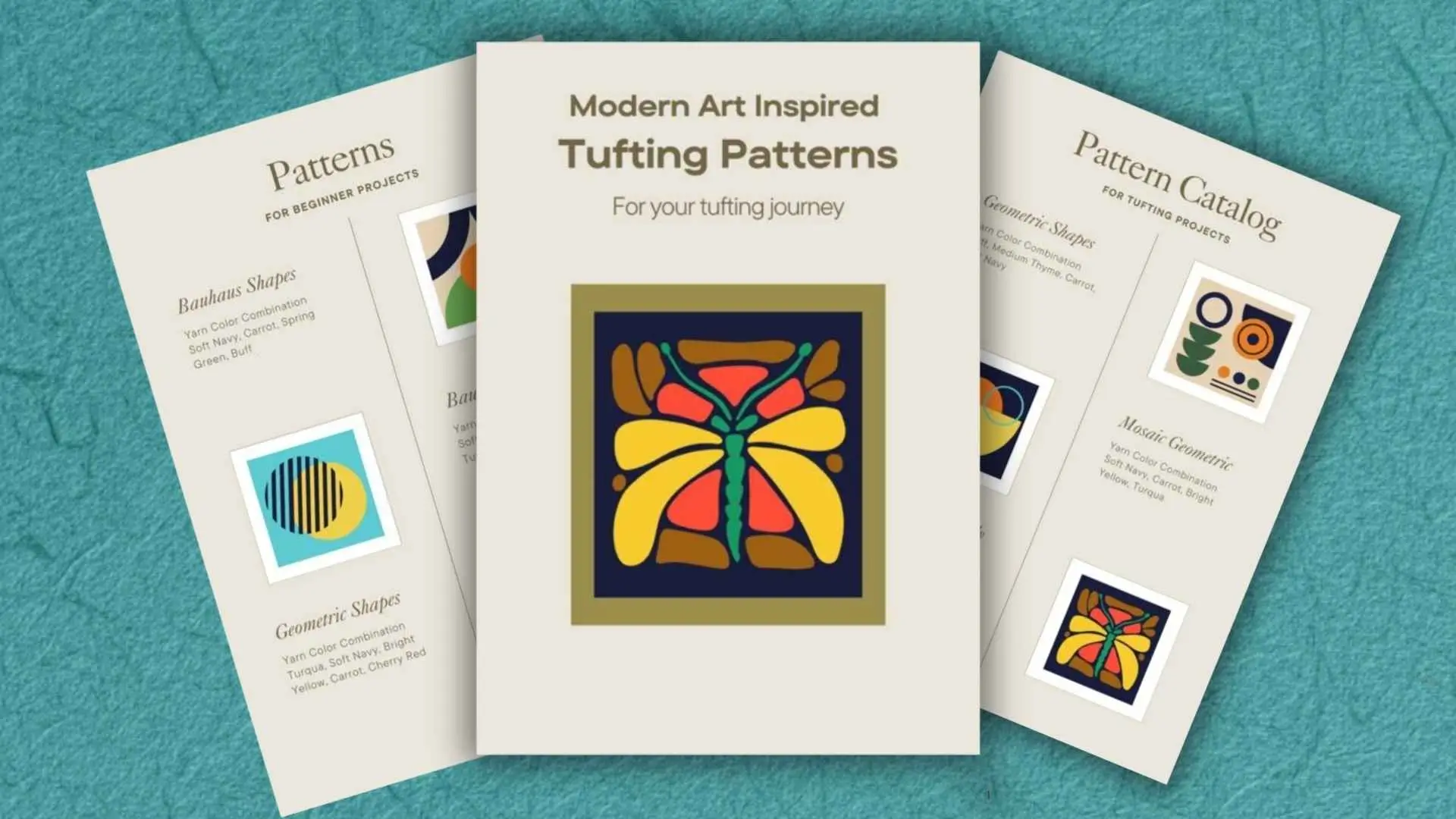
If you are looking for rug tufting patterns free for beginners, this guide includes three simple designs that help you practice essential tufting gun techniques while creating modern home decor.
This is not just a beginner pack, it is a progression from simple shapes to more advanced rug designs.
New to tufting? Start with this beginner guide →
What are the best rug tufting patterns for beginners?
Beginner rug tufting patterns often use simple shapes such as color blocks, circles, and basic geometric designs. These give you a chance to practice straight lines, curves, and controlling the tufting gun before moving on to more detailed patterns.
Each project includes:
- Printable rug tufting pattern templates (plus bonus advanced designs)
- estimated yarn amounts
- beginner friendly instructions
- frame sizing guidance
If you want to turn these into a business, here’s how to price and sell your rugs →
New to tufting? See the full tufting tools setup guide →
Recommended Tufting Starter Supplies
tufting gun (complete starter kit recommended)
primary backing cloth
Get the Free Rug Tufting Patterns PDF
Includes:
- 3 beginner patterns to get started fast
- 12 advanced rug designs to level up your skills
- step by step tufting order for clean results
These advanced patterns include geometric, abstract, and modern shapes that are not shown in this post.
Ready to learn the full tufting process? Learn tufting with Trish Andersen →
Choose Your Rug Tufting Pattern
Beginner Yarn Calculator
Below are estimated yarn amounts for each pattern. Actual yarn usage can vary depending on yarn weight, pile height, tufting density, and how densely you fill the design. Consider having extra yarn available, especially in your main or background color.
| Pattern Design | Project Size | 7oz Balls | 1lb Skeins |
| Color Block Squares | 24″ x 24″ | 8-10 Balls | 5 Skeins |
| Concentric Circles | 30″ Diameter | 9-11 Balls | 4.5 Skeins |
| Geometric Star | 30″ x 30″ | 10-12 Balls | Approx. 6 Skeins |
For more patterns, check these Free Geometric Tufting Patterns for Beginners (Easy Designs + Templates) →
Choosing a Frame for Beginner Tufting Patterns
A smaller tabletop tufting frame can be a practical choice for beginner projects and simple pattern designs. The exact working area varies by frame, so check your pattern dimensions against the usable tufting area before you begin.
See my recommended beginner tufting frames on Amazon →
A smaller working area can be helpful for beginners because it can require less yarn than a larger rug, make the project quicker to complete, and make simple patterns easier to trace and manage.
Always compare the pattern size with the frame’s usable working area. You may need to resize the printable pattern to fit your frame.
Pattern 1: Color Block Squares
Difficulty: Very Beginner
Size: 24″ x 24″ (2ft x 2ft = 4 sq ft)
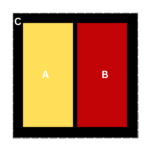
Design
This modern rug uses simple geometric sections.
- Outer border: Color C, about 2 inches wide
- Left section: Color A, about 10 inches
- Right section: Color B, about 10 inches
Materials
Using 7oz balls:
- Colour A: 3-4 balls
- Colour B: 3-4 balls
- Colour C: 2 balls (14oz / 400g)
- Total: 8-10 balls
OR
Using 1lb skeins:
- Colour A: 1.5-2 skeins
- Colour B: 1.5-2 skeins
- Colour C: 1 skein
- Total: 5 skeins
Backing fabric: 40″ x 40″
Instructions
- Stretch the primary tufting cloth evenly across your frame.
- Project or draw the pattern onto the cloth.
- Mark the border approximately 2 inches from the edges of the design.
- Draw a vertical line through the center.
- Tuft the border, then fill the left and right sections.
After tufting, trim or separate the color sections as needed before moving on to the finishing process.
Bonus: 12 Advanced Rug Tufting Patterns (Inside the PDF)
Once you are comfortable with the beginner designs, the full PDF includes 12 additional patterns to help you improve your technique.
These patterns focus on:
- sharper angles
- cleaner curves
- more detailed layouts
You will also find:
- abstract designs
- modern geometric layouts
- more complex compositions for larger rugs
Pattern 2: Concentric Circles
Difficulty: Beginner
Size: 30″ diameter

Design
Three concentric circles:
- Outer circle: 30″
- Middle circle: 20″
- Inner circle: 10″
Materials Specific to This Project
Using 7oz balls:
- Outer circle: 4-5 balls
- Middle circle: 3-4 balls
- Inner circle: 2 balls
- Total: 9-11 balls
OR
Using 1lb skeins:
- Color A: 2 skeins
- Color B: 1.5 skeins
- Colour C: 1 skein
- Total: 4.5 skeins
Backing fabric: 40″ × 40″ square
Instructions
- Stretch the primary tufting cloth evenly across your frame.
- Mark the center point of the design.
- Project or draw the three circles: 30-inch outer circle, 20-inch middle circle, and 10-inch inner circle.
- Tuft the inner circle first, followed by the middle circle and outer circle.
- After tufting, trim or shape between the color sections as needed to define the circular design.
Designer note
Circular rugs soften the straight lines of furniture and work well in living rooms, bedrooms, or nurseries.
Want to see the tufting process from start to finish? Trish Andersen’s beginner tufting course walks through the process of creating a tufted piece, from developing your design to tufting and finishing. Learn more about the course →
Pattern 3: Geometric Star
Difficulty: Advanced Beginner
Size: 30″ x 30″
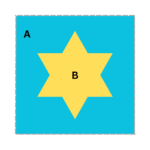
Design
Central circle with six rays.
- 10 inch center circle
- six triangular star points
- background fill
Materials Specific to This Project
Using 7oz (200g) balls:
- Background: 5 to 6 balls
- Star rays: 5 to 6 balls
- Total: 10-12 balls of 7oz acrylic yarn
OR using 1lb (454g) skeins:
- Background: 2.5 skeins
- Star Points: 2.5 skeins
- Centre circle: 1 skein
Total: approximately 6 skeins
Backing fabric
40″ by 40″.
Instructions
- Stretch the primary tufting cloth evenly across your frame.
- Draw or project a 10-inch center circle.
- Mark six evenly spaced star points around the center circle.
- Tuft the background first, followed by the star rays and center circle.
- After tufting, trim or shape around the star points and center circle as needed to define the design.
Check the official yarn weight chart to pick the right size yarn for your rug.
How to Turn Any Image Into a Rug Tufting Pattern
Once you have mastered simple templates, you can convert almost any image into a tufting design.
The easiest method is to use a digital projector.
Steps
- choose high contrast clip art or line art
- project the image onto your primary tufting cloth
- trace the outlines with marker
- simplify details for easier tufting
Tip: Choose an image with clear outlines and limited small details. Simple shapes are easier to trace onto tufting cloth and easier to follow with a tufting gun.
Frequently Asked Questions
Simple geometric designs like color blocks or circles are the easiest because they focus on basic machine control. The full PDF includes 12 additional patterns, including abstract and geometric designs that help you move beyond basic shapes.
You can find beginner-friendly tufting tools and materials using the guides below:
See the full tufting tools setup guide
See the best tufting frames for beginners
If you’re ready to move beyond beginner patterns, a structured course can help you see how the different stages of tufting come together. Learn tufting with Trish Andersen →
Yarn usage for a 24×24-inch tufted rug varies depending on yarn weight, pile height, tufting density, and the design. For the Color Block pattern in this guide, estimate about 8 to 10 balls of 7 oz yarn, and consider having extra yarn available for your main or background color.
If you’ve mastered these free patterns and want to start selling your work, start here: How To Start A Tufted Rug Business → and upgrade your setup with my complete tufting equipment and supplies list on Amazon →