
The best glue for rug tufting beginners is typically an adhesive that provides a strong bond while remaining suitable for the materials used in the project.
ROBERTS 3095 is an acrylic latex, solvent-free carpet adhesive designed for carpet installation. Its high-tack formulation and strong initial grab make it one option to consider when choosing an adhesive for finishing a tufted rug.
General-purpose craft glues may be suitable for some decorative tufted pieces, but for rugs, it’s better to choose an adhesive that’s appropriate for the materials and intended use of the finished piece.
The finishing stage plays an important role in how well your rug holds together over time. Applying the adhesive evenly and allowing it to dry according to the manufacturer’s instructions helps secure the tufted yarn before backing and finishing.
Before you begin, make sure you have the right tools and safety gear ready.
ROBERTS 3095 Carpet Adhesive
ROBERTS 3095 is an acrylic latex, solvent-free carpet adhesive with a high-tack formulation and strong initial grab. It’s designed for indoor carpet installations and can be considered when choosing an adhesive for finishing a tufted rug.
Best for: Carpet adhesive option, strong initial grab, indoor projects
New to tufting?
Need a stable setup before finishing?
Choosing the Right Glue for Rug Tufting
Choosing the right adhesive is an important part of finishing a tufted rug. The best option depends on the materials you’re using, how the finished rug will be used, and your workspace.
Natural vs Synthetic Glue (What to Choose)
| Adhesive Type | Primary Benefit | Durability & Flexibility | Safety Considerations |
| Natural Rubber Latex | Flexible finish, easier to roll/transport. | High flexibility and long-lasting bond. | Check the manufacturer’s safety instructions and use with appropriate ventilation. |
| Synthetic Latex (SBR) | Strong, fast-setting bond. | High tensile strength. | VOC content and safety requirements vary by product. Follow the manufacturer’s label and ventilation instructions. |
Tip: Choosing a Carpet Adhesive: When comparing adhesives, look at the manufacturer’s recommended applications, drying instructions, and compatibility with your rug materials. ROBERTS 3095 is a high-tack acrylic latex carpet adhesive with strong initial grab, making it one option to consider for the backing stage of a tufting project.
How to Apply Glue Without Ruining Your Rug
The goal is to cover the back of the rug evenly without letting glue soak through to the front.
- Step 1: Prepare the back of the rug
Trim any loose yarn or stray fibers and make sure the back of the tufted area is clean before applying adhesive.
- Step 2: Apply the adhesive evenly
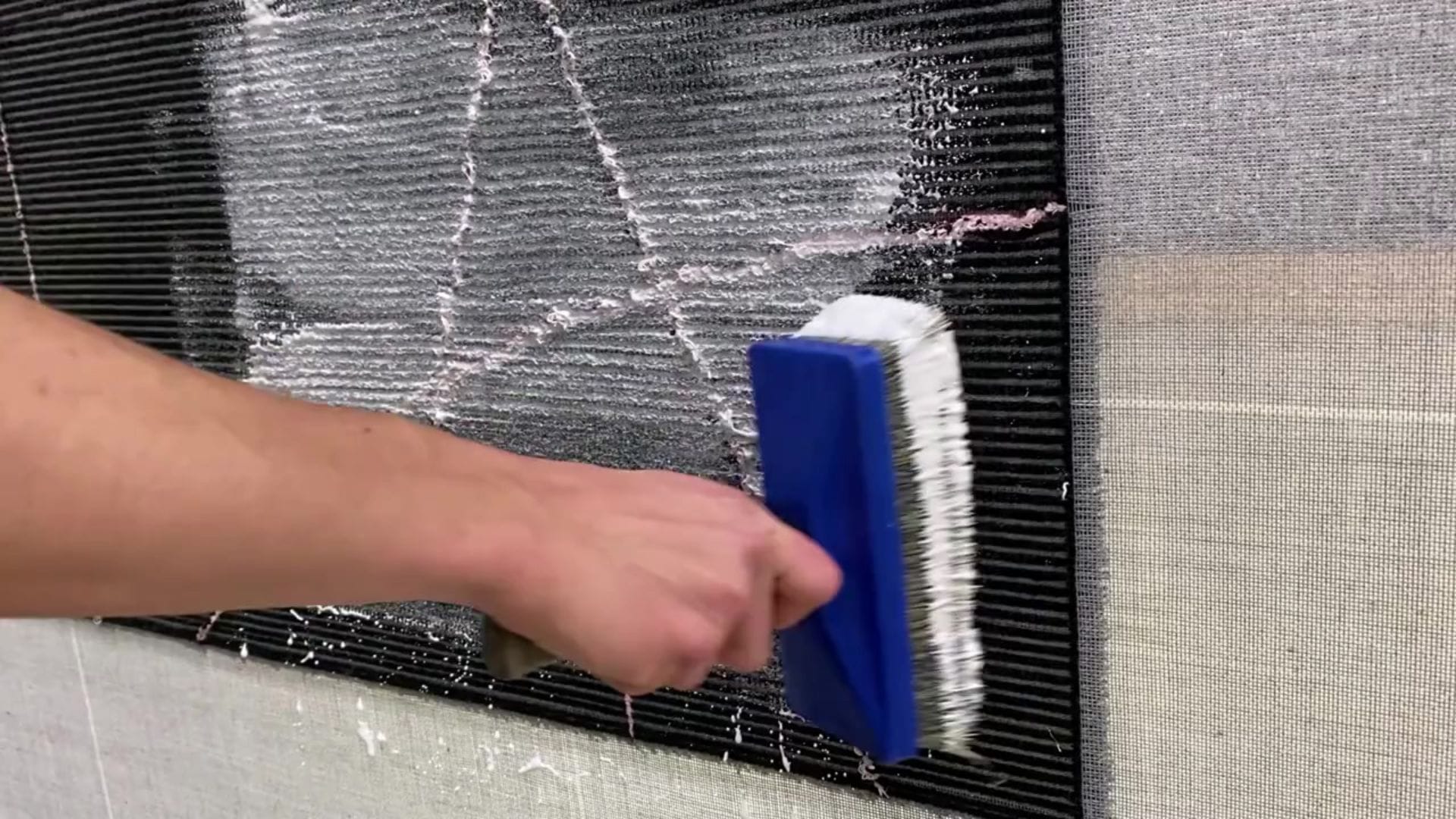
Follow the adhesive manufacturer’s instructions and spread it evenly across the back of the tufted area. Work carefully around the edges and avoid using so much adhesive that it pushes through to the front of the rug.
See our recommended spreaders on the Tools & Materials List.
- Step 3: Watch the Gluing Process Rhody demonstrates the gluing process in his full guide. Watch the gluing chapter starting at 24:52.
How Long to Let Your Rug Dry
Once the adhesive is applied, leave the rug on the frame while it dries. Follow the adhesive manufacturer’s instructions for drying and curing time before removing the rug from the frame or adding the final backing.
Drying times can vary depending on the adhesive, how heavily it is applied, and the conditions in your workspace, so check the product instructions rather than relying on one drying time for every glue.
Backing and Finishing Your Rug
Once the adhesive has dried according to the manufacturer’s instructions, you can remove the rug from the frame and move on to adding the backing and finishing the edges. These final steps help give the rug a cleaner, more finished appearance.
1. Best Backing Materials for Your Rug
Secondary backing covers the back of the finished rug and can provide a cleaner appearance, additional protection, or grip depending on the material you choose. Check the “Finishing & Backing” section of our Best Tufting Tools & Materials List.
| Backing Material | Why You Might Choose It |
|---|---|
| Felt | A common option for giving the back of a tufted piece a clean, finished appearance. |
| Non-Slip Backing | Useful when additional grip is desired for a floor rug. |
| Canvas | A lightweight option that can work well for decorative pieces and wall hangings. |
2. How to Finish Rug Edges Cleanly
One common way to finish the edges of a tufted rug is to fold the excess primary backing toward the back of the rug, creating a neat finished edge.
- Fine-Tune the Edges: Before finishing, trim loose threads and check the perimeter for areas that need cleanup.
- Cut the Excess Fabric: Once the adhesive has dried according to the manufacturer’s instructions, trim the excess primary backing around the rug. For curves, making small cuts in the excess fabric can make it easier to fold neatly around the shape.
- Fold and Secure: Fold the remaining fabric toward the back of the rug and secure it using an adhesive suitable for your materials.
Tip: Using Different Adhesives for Finishing
Different adhesives can be useful for different parts of the finishing process, depending on your backing material and the type of finish you want.
- For Folded Edges: Hot glue can be useful for securing folded fabric around the perimeter because it sets quickly. Follow the glue manufacturer’s instructions and take care when working with hot adhesive.
- For Secondary Backing: A spray adhesive like 3m Super 77 Spray Adhesive can be used to attach felt or another secondary backing material. Choose an adhesive that’s suitable for both materials and follow the manufacturer’s application and ventilation instructions.
3. How to Shape and Trim Your Rug
Trimming and carving can help define the shapes in your design and give the finished rug a cleaner appearance.
Check Your Tufting: Before trimming, look for uneven areas or gaps that may need attention. Consistent tufting around the edges and between color sections can make the finishing process easier.
Trim Gradually: Use rug-carving clippers or scissors to even out the surface and clean up the areas where different colors or shapes meet. Remove small amounts of yarn at a time so you don’t accidentally cut too deeply.
Create Definition: If you want more separation between colors or shapes, carefully trim along their edges to create a more defined finish.
For the full breakdown of shearing tools, blade angle, and the mistakes that ruin rugs, see my complete guide to finishing and shearing a tufted rug.
Fixing Common Rug Problems
How to Fix Glue Mistakes
If adhesive gets through to the front of your rug, avoid immediately applying heat or solvents, which could damage the yarn or affect the color.
First, check the adhesive manufacturer’s instructions for recommended cleanup methods. If the adhesive is still wet, carefully remove the excess according to the product directions.
For dried adhesive, test any recommended cleaning method on a small, inconspicuous area first. Work slowly to avoid damaging the yarn or surrounding fibers.
How to Stop Your Rug from Curling
Curling can happen for several reasons, including uneven fabric tension, the way the adhesive dries, or how the backing and edges are finished.
Let the Adhesive Dry Completely: Follow the adhesive manufacturer’s drying and curing instructions before removing the rug from the frame.
Check the Backing and Edges: Make sure the backing is attached evenly and that the finished edges aren’t pulling more tightly in some areas than others.
For Floor Rugs: If the finished rug tends to move or lift on a hard floor, consider using a rug pad or non-slip backing that’s appropriate for your flooring.
Best Glue for Rug Tufting Beginners: FAQs
A flexible adhesive designed for carpet or similar applications can work well for tufted rugs. Products such as Roberts 3000 or 3095 are options to consider, but always check the manufacturer’s instructions to make sure the adhesive is suitable for your rug materials and intended use.
Allow the adhesive to dry according to the manufacturer’s instructions before removing the rug from the frame. Even backing and carefully finished edges can also help the rug lie flatter once it’s completed.
You don’t necessarily need both. Hot glue can be useful for securing folded edges, while a spray adhesive may be useful for attaching secondary backing. Choose an adhesive that’s compatible with your materials and follow the manufacturer’s application and safety instructions.
For the main adhesive, I would use a product intended for carpet, rug, or similar applications rather than relying on general-purpose craft glue. Always check that the adhesive is compatible with the materials you’re using.
Conclusion and Next Steps
Choosing the right glue is an important part of finishing a tufted rug. Look for an adhesive that’s suitable for your rug materials, follow the manufacturer’s application and drying instructions, and take your time when adding the backing and finishing the edges.
A few things to remember:
- Follow the drying instructions: Allow the adhesive to dry or cure for the recommended amount of time before moving on to the next step.
- Finish carefully: Trim loose fibers, check the edges, and make sure your backing is attached evenly.
- Choose products for your project: The best adhesive and backing materials can vary depending on whether you’re making a decorative piece or a rug intended for floor use.
Ready to build your tufting setup?
View the Complete Rug Tufting Tools & Materials List →
New to the entire process?
Read the Complete Beginner’s Guide to Rug Tufting →