
Is Rug Tufting Profitable In 2026?
Rug tufting can be profitable, but how much you earn per rug depends on your material costs, labor time, pricing, selling fees, shipping, and the type of rugs you create. Custom designs, carved pieces, personalized work, and other specialized designs may command higher prices than basic designs.
For beginners, the goal should be to understand your true cost per rug and develop consistent tufting and finishing skills before setting your prices.
5 Steps to Start a Rug Tufting Business:
- Get the essential tufting tools and materials
- Practice with beginner-friendly patterns
- Improve your tufting, carving, and finishing skills
- Calculate your costs and set profitable prices
- Build a portfolio and start marketing your work
Start With Beginner Patterns
If your goal is to eventually sell rugs, start with simple patterns to build control before taking custom orders.
Download Free rug tufting patterns here →
Start with the beginner rug tufting guide →
When Should You Start Selling?
You’re ready to sell when you can consistently:
- Tuft without major gaps or loose yarn
- Trim and finish edges neatly
- Apply adhesive according to the manufacturer’s instructions
- Attach and finish the backing securely and neatly
There isn’t a specific number of rugs you need to make before you start selling. Focus instead on whether you can produce consistent work that you feel comfortable charging for.
Start taking paid orders when you can reliably tuft clean lines, secure the yarn and backing, finish the edges neatly, and estimate your material and labor costs. As your technique, portfolio, and demand improve, you can adjust your pricing accordingly.
Why Can a Rug Tufting Business Be Profitable?
Custom tufting gives makers opportunities to sell products that are difficult to compare directly with mass-produced rugs. Personalized designs, logo rugs, wall art, carved designs, and custom sizes can all help differentiate your work.
Profitability still depends on what customers are willing to pay compared with your total costs, including yarn, backing, adhesive, equipment, selling fees, shipping, and your time.
Ways to Increase the Value of Your Work:
- Custom designs: Create rugs around a customer’s colors, theme, or space.
- Logo and branded rugs: Create custom pieces for businesses and creators when you have permission to use their branding.
- Carved and textured designs: Add dimension and detail that can distinguish your work.
- Quality materials and finishing: Choose materials appropriate for the rug’s intended use and finish each piece carefully.
How Much Profit Can You Make Per Rug?
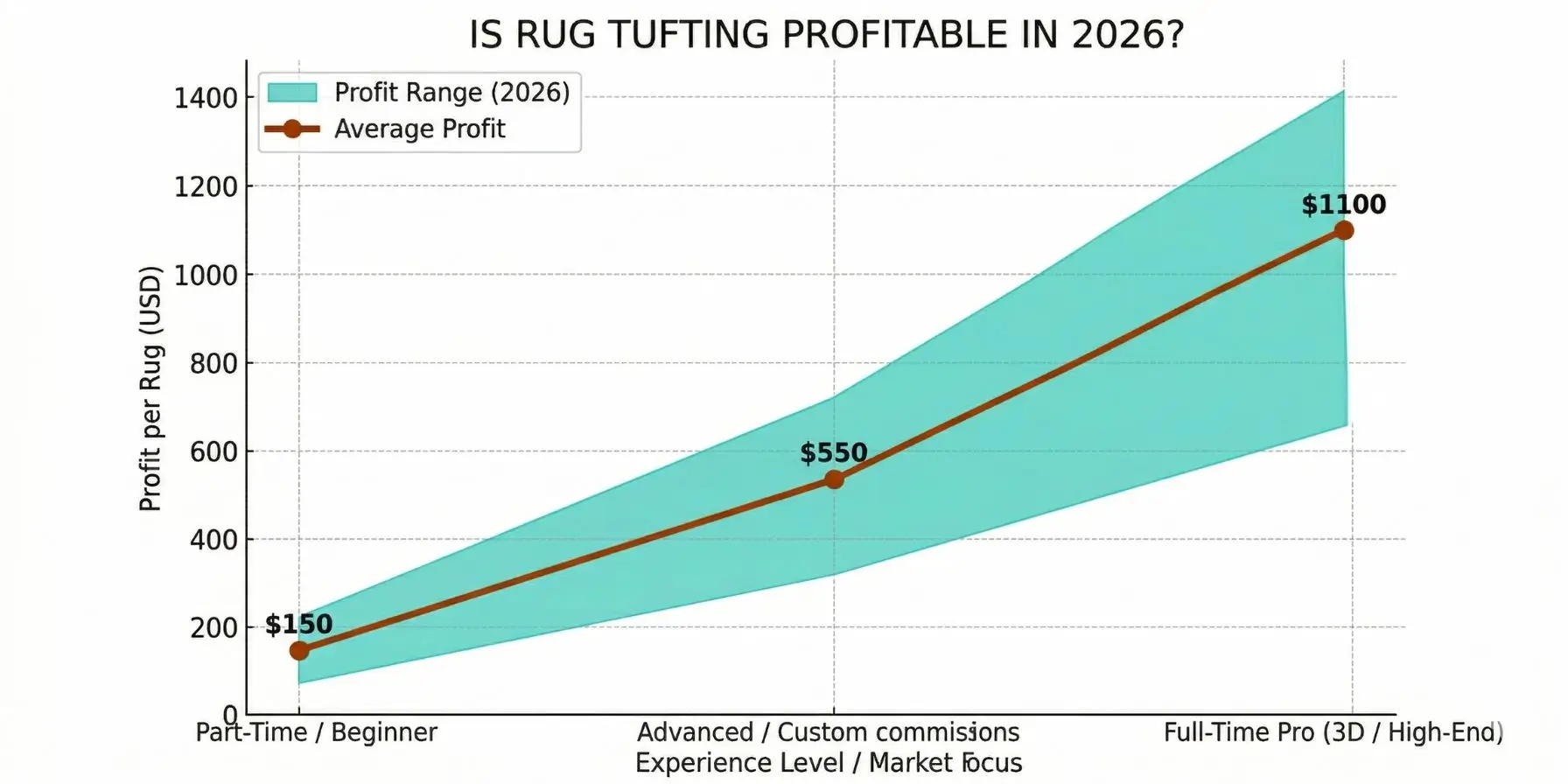
Profit varies from rug to rug. A small, simple design may require much less yarn and labor than a large custom or heavily carved piece, so there isn’t one reliable profit figure that applies to every tufting business.
To estimate your profit, start with your selling price and subtract all of the costs associated with making and selling the rug, including:
- yarn
- primary and secondary backing
- adhesive
- packaging
- shipping costs you absorb
- marketplace or payment fees
- other project-specific expenses
Your time matters too. Tracking how many hours you spend designing, tufting, carving, finishing, and packing each rug will help you determine whether your pricing actually makes sense.
Using a pricing formula can help you avoid undercharging, especially when materials and finishing costs vary between projects.
See the best glue for rug tufting beginners →
How Long Does It Take to Make a Tufted Rug?
The time required to make a tufted rug depends on its size, design complexity, yarn density, your experience level, and how much carving and finishing the piece requires.
A simple design may be completed much faster than a detailed or heavily carved rug of the same size.
Remember to account for the entire process, not just tufting time:
- preparing and tracing the design
- stretching the primary cloth
- tufting
- carving and trimming
- applying adhesive and allowing it to dry according to the manufacturer’s instructions
- adding and finishing the backing
- photographing, packaging, and preparing the rug for delivery or shipping
For a rug business, track your actual working time on several projects. This gives you a much better basis for pricing your labor than relying on a standard number of hours per rug.
How Much Does It Cost to Start a Rug Tufting Business?
You don’t need a large studio to start tufting, but you do need enough safe working space for your frame, tufting gun, yarn, and finishing supplies.
Startup costs vary by frame size, tufting gun, materials, and the tools you already own. The ranges below are planning estimates, so check current prices before setting your budget.
| Item | Lower-Cost Estimate | Higher-Cost Estimate |
|---|---|---|
| Tufting gun | $150–$250 | $300–$500 |
| Frame (DIY vs aluminum) | $10–$50 | $100–$200 |
| Yarn (starter batch, 20 colors) | $90–$120 | $150–$300 |
| Primary tufting cloth | $40–$80 | $80–$150 |
| Adhesive (latex/carpet glue) | $30–$50 | $50–$80 |
| Backing cloth/fabric | $20–$40 | $50–$100 |
| Carpet trimmer/shears | $30–$50 | $80–$150 |
| Estimated Equipment & Materials Total | ~$370–$640 | ~$810–$1,480 |
Choosing Your Tufting Equipment
Choosing a Tufting Gun and Starter Setup
Your tufting gun, frame, and fabric tension all affect how easy it is to control your stitches and produce consistent results.
Beginners can buy their tools individually or choose a complete starter kit. A kit can be convenient because it bundles several of the basic tools together, but check exactly what is included before buying so you don’t pay for supplies you already own.
Beginner Tufting Gun Kit Option
BESGEER Tufting Gun Kit with Adjustable Aluminum Frame, Carpet Trimmer, 2-in-1 Cut & Loop Pile, and Accessories
This bundled starter kit combines a cut and loop pile tufting gun with several tools and supplies for getting started. It can be a convenient option for beginners who prefer a bundled setup instead of sourcing each item separately.
May Suit: beginners, first-time rug makers, and anyone looking for a bundled starter setup.
A convenient option if you want several of the basic tufting tools bundled together. Check the current Amazon listing for the latest kit contents before purchasing.
View BESGEER Tufting Gun Kit on AmazonThe following Amazon links are affiliate links.
How to Price Your Tufted Rugs for Profit
Underpricing is a common problem for handmade businesses because material costs are only part of the picture. To price a tufted rug properly, you also need to account for your time, finishing supplies, selling fees, packaging, shipping, and other business expenses.
Simple Rug Profit Formula
If you want to estimate your profit by hand, you can start with this basic formula:
Selling Price − (Materials + Selling Fees + Packaging + Shipping + Other Business Costs) = Estimated Profit Before Taxes
- Step 1: Calculate the total cost of your materials for the rug.
- Step 2: Decide how you will account for your labor and the time required to make the piece.
- Step 3: Add selling fees, packaging, shipping costs you absorb, and other project expenses.
- Step 4: Set a selling price that covers those costs and leaves an acceptable profit margin.
Check your pricing here with my free rug profit calculator →
The quality and consistency of your work can influence what customers are willing to pay. Clean lines, secure construction, careful finishing, and attention to detail can all help increase the perceived value of a handmade rug.
As your skills improve, you can also experiment with techniques such as carving and dimensional texture to develop a more distinctive style.
Finding Customers and Marketing Your Brand
Showing your process can help potential customers understand the work that goes into a handmade rug. Behind-the-scenes content can include designing, tufting, carving, trimming, finishing, and even some of the challenges you encounter along the way.
This also gives you more content to share while building a portfolio, rather than relying only on photos of finished rugs.
Your brand name can also help communicate the style and personality of your business and make your work easier for customers to remember.
See how to choose the right rug tufting business name →
How do I get my first tufting customers?
Start by building a small portfolio that shows the quality and style of your work. Then experiment with a few different ways to reach potential customers:
- Social media: Share short videos of the tufting, carving, trimming, and finished-rug reveal.
- Local businesses: Consider creating samples or reaching out to businesses that may be interested in custom logo or branded rugs.
- Etsy: Use specific search phrases that describe the type of rug you make rather than relying only on broad terms such as “custom rug.”
- Word of mouth: Ask early customers to share photos, reviews, or your business with people who may be interested in custom work.
Track where your inquiries and sales actually come from so you can spend more time on the marketing channels that work for your business.
Bonus Income: Tufting Workshops
Once you have enough experience to teach the process safely, workshops can provide another potential revenue stream for a tufting business.
When setting a workshop price, consider:
- materials used by each participant
- class length and preparation time
- venue or studio costs
- equipment and maintenance
- payment or booking fees
- insurance and other business expenses
- the number of participants you can safely supervise
Workshops can also introduce new people to your work and may lead to future custom orders or repeat classes.
Build Your Own Website and Diversify Where You Sell
Marketplaces such as Etsy can help you reach customers who are already searching for handmade products, but marketplace, payment processing, advertising, and other fees can reduce your margins.
Having your own website gives you another place to showcase your portfolio, build your brand, collect direct inquiries, and develop relationships with repeat customers.
I use Hostinger because it provides an affordable way to build and manage a small business website.
Packaging & Shipping Your Rugs
Shipping costs can take a significant bite out of your profit, especially as rug size and weight increase. Think about packaging and shipping costs before quoting a customer.
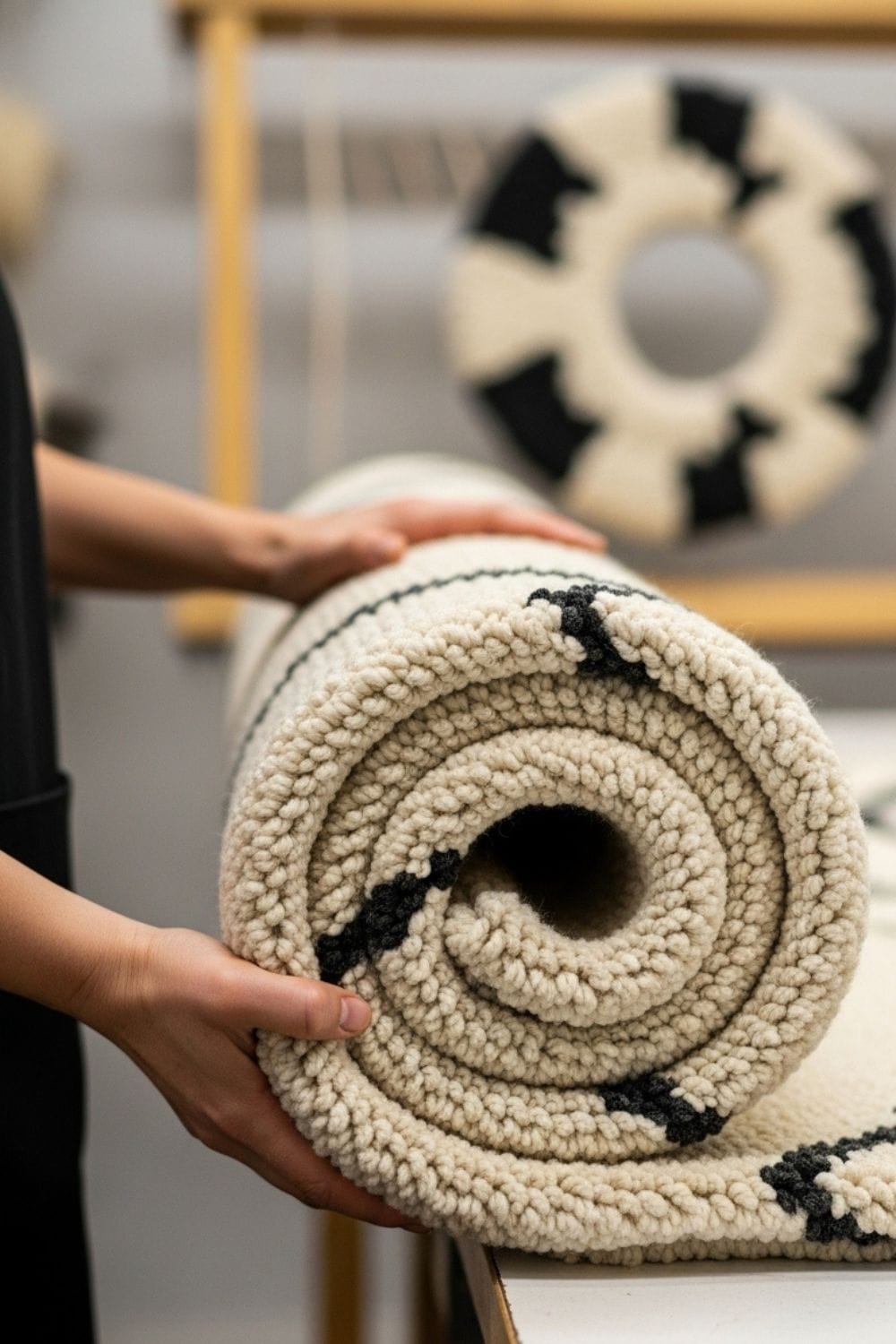
For rugs that can safely be rolled, roll the rug carefully rather than folding it to help avoid creases. Protect it from moisture with appropriate wrapping and use sturdy packaging sized for the finished roll.
Before shipping:
- Measure the packaged rug
- Weigh the complete package
- Compare available carrier rates
- Include packaging costs in your pricing
- Consider tracking and insurance for higher-value orders
Keep a record of your actual shipping costs so future quotes become more accurate.
5 Common Mistakes That Can Reduce Your Profit
| Mistake | Why It Matters | Better Approach |
|---|---|---|
| Underpricing your work | You may cover materials but overlook your time and other expenses. | Track your complete costs before setting a price. |
| Choosing materials without considering the rug’s use | Different fibers and backing materials have different durability, feel, and care requirements. | Choose materials based on the rug’s intended use and test them before selling. |
| Rushing the finishing process | Poor adhesion, trimming, or edge finishing can affect the final quality. | Follow the adhesive manufacturer’s instructions and allow adequate drying or curing time. |
| Poor product photos | Customers may have difficulty seeing the texture, colors, and details of your work. | Photograph finished rugs in good lighting and include close-up detail shots. |
| Not planning materials before starting | Running short on yarn or backing can delay a project and increase costs. | Estimate what you’ll need and keep extra material available when practical. |
FAQ: How to Start a Tufted Rug Business
The rug tufting market is competitive, but that doesn’t mean there isn’t room for new businesses. Instead of trying to compete with every tufting seller, focus on developing a recognizable style or serving a specific type of customer.
Custom designs, distinctive color palettes, carved details, wall pieces, logo rugs created with permission, or a particular design niche can help differentiate your work. Strong photography, consistent finishing, good customer service, and clear pricing can also help your business stand out.
Yes. You don’t need professional drawing skills to start tufting. Simple shapes, geometric patterns, abstract designs, lettering, and beginner-friendly templates can all work well for tufted rugs.
A projector can also help transfer a design onto your tufting cloth. If you’re using artwork, characters, logos, or other designs created by someone else, make sure you have permission or the appropriate rights to use them commercially.
As your skills develop, you can create more of your own original designs and develop a recognizable style for your business.
The best yarn depends on what you’re making and how the finished piece will be used. Wool is popular for durable, higher-end rugs, while acrylic can be an affordable option for decorative pieces and practicing your technique.
Before selling rugs, test the yarn you plan to use for shedding, durability, appearance, and how well it works with your tufting setup. Be clear with customers about the fiber used and any care recommendations.
For a more detailed comparison, see my Best Yarn for Rug Tufting guide.
Business registration, licensing, and tax requirements depend on where you live and operate your business. Before you begin selling, check the requirements for your country, state or province, and local area.
Depending on your location, you may need to consider business registration, sales tax or VAT, income tax, local permits, and record-keeping requirements.
Your choice of business structure, such as operating as a sole proprietor or forming a separate business entity, can also have legal and tax implications. Check with the appropriate government agencies or a qualified local professional for guidance specific to your situation.
Business insurance may be worth considering as your tufting business grows, especially if you sell products to customers, attend markets, teach workshops, or have people visit your workspace.
Depending on your business, coverage to ask about may include general liability, product liability, coverage for your equipment, and insurance for workshops or events.
Insurance requirements and costs vary by location and business activity, so compare policies and speak with a licensed insurance provider about the coverage appropriate for your business.
It may be possible to run a small tufting business from an apartment or limited workspace, but you’ll need to plan your setup carefully.
Make sure you have enough room to safely use your tufting frame and gun, store yarn and supplies, and complete finishing work. Also consider noise, ventilation, adhesive use, electrical access, and where finished rugs will be stored.
If you rent or live in a shared building, check your lease and any local rules that may apply to operating a business or using equipment from home.
Starting with a smaller frame can also make it easier to work within a limited space.
There isn’t a set number of rugs you need to sell before you recover your startup costs. Your break-even point depends on how much you spend getting started and how much profit you actually make from each sale.
A simple way to estimate it is:
Startup Costs ÷ Average Profit Per Rug = Approximate Number of Rugs to Break Even
For example, once you’ve sold a few rugs, use your actual material, selling, packaging, shipping, and other business costs to calculate your average profit per rug. That will give you a much more realistic break-even estimate for your business.
Scaling to a full-time tufting business depends on your profit margins, available working hours, demand, and how efficiently you can complete each order.
Before increasing your order volume, track how much time and money each rug actually requires. Look for ways to improve your workflow without sacrificing quality.
As demand grows, you might consider raising prices, offering higher-value custom work, limiting the number of designs or sizes you offer, creating ready-to-ship pieces, or adding other income streams such as workshops.
If orders consistently exceed what you can comfortably produce, you can then decide whether outsourcing certain tasks or hiring help makes financial sense.
Start Your Tufting Business the Right Way
Building a profitable tufting business requires attention to several areas, including:
- technique
- pricing
- positioning
- controlling your costs
- understanding your customers
Start with simple patterns, improve your finishing, and gradually build a portfolio that reflects your skills and style.
👉 Start with beginner patterns →
👉 Explore the beginner-friendly tufting course with Trish Andersen →
👉 Explore Tufting Tools & Supplies →
Startup costs vary depending on the tufting gun, frame, materials, finishing tools, and supplies you choose. Start with the essentials, track what you actually spend, and upgrade your equipment as your skills and business needs grow.
Clean finishing also plays a role in pricing, especially for garments and edges →
Not sure what rug size to recommend? Use this free rug size calculator to help determine dimensions that work well with different room layouts and furniture arrangements.