

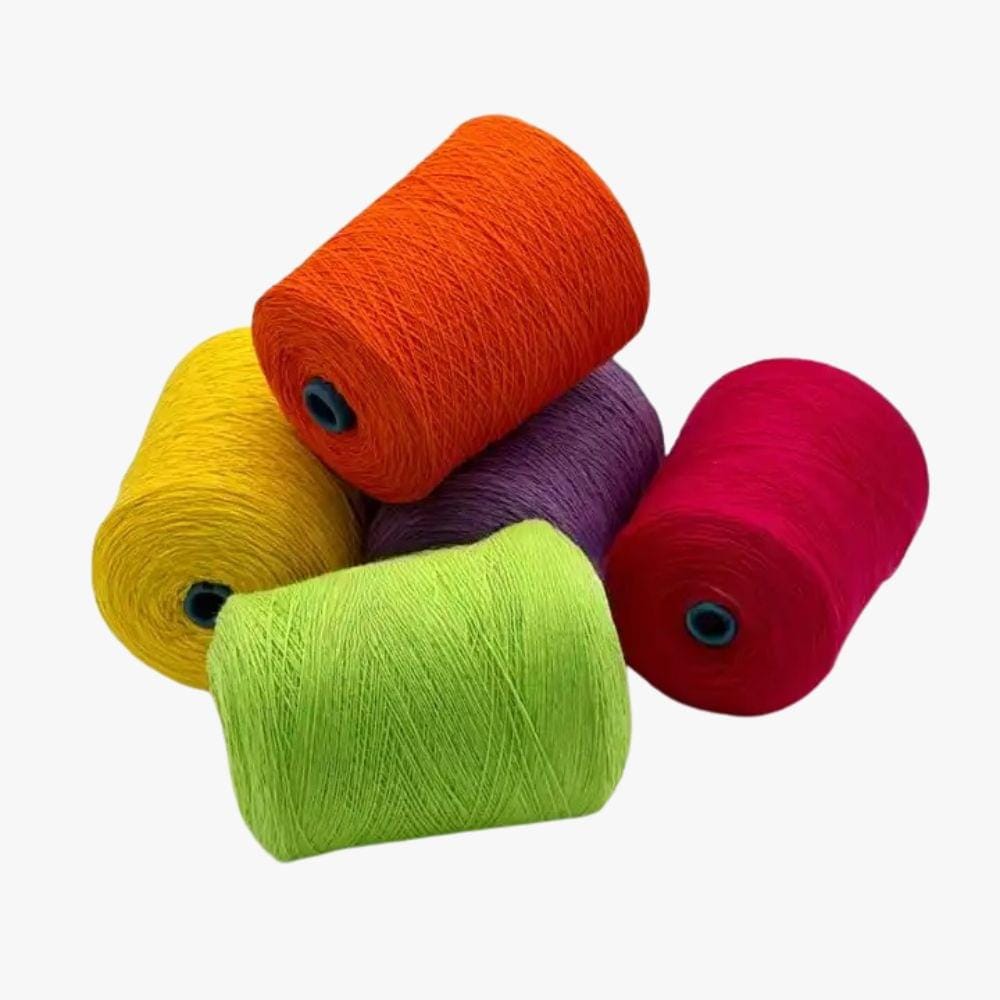
Choosing the best tufting yarn is the single most important factor in preventing tufting gun jams, achieving dense pile coverage, and ensuring your custom rugs hold up over time. Whether you are creating decorative wall hangings or high-traffic floor rugs, matching your fiber type to your machine setup is essential.
If you are looking for a curated collection of tested, high-performing worsted weight (#4) yarns and color palettes, you can browse my complete studio selection directly on Amazon:
What Yarn Weight Works Best for Tufting Guns?
Most electric tufting machines (both cut pile and loop pile) are designed to feed Medium Worsted Weight (#4) yarn.
- The Two-Strand Rule: To achieve a lush, thick pile that completely hides your primary backing cloth, always feed two strands of worsted weight yarn simultaneously through the needle eye of your gun.
- Yarn Cones vs. Skeins: Feeding yarn straight from a center-pull skein or winding your yarn onto cones drastically reduces tension drag, preventing your thread from snapping mid-pass.
Setting Up Your Machine? Make sure your equipment is adjusted properly before threading your yarn. Review my complete walkthrough on The Complete Rug Tufting Starter Kit Guide: 2-in-1 Guns, Frames & Carving Trimmers for Beginners.
Acrylic vs. Wool: Which Should You Choose?
1. Acrylic Yarn (Best for Beginners & Wall Hangings)
Acrylic is the most popular choice for new rug makers due to its affordability, vibrant color availability, and widespread accessibility.
- Pros: Budget-friendly, vast color spectrum, easy to shear and carve.
- Cons: Less resilient under heavy foot traffic over several years.
- Top Recommendation: Red Heart Super Saver Worsted (#4). It offers the exact structural stiffness needed to stay locked into primary tufting cloth without slipping.
New to Fiber Crafts? If you are deciding between an electric machine setup and traditional hand tools, check out my comparison guide onRug Tufting vs. Punch Needle: Key Differences & Tool Guideto see which method suits your workspace best.
2. Wool Yarn (Best for Professional Floor Rugs)
Wool is the industry standard for commercial and heirloom-quality rugs.
- Pros: Highly durable, natural dirt resistance, luxurious tactile finish.
- Cons: Higher material cost per pound and requires specialized shearing blades.
Featured Palette Collection: Red Heart Super Saver Worsteds
For crafters putting together their first color palettes, Red Heart Super Saver offers consistent fiber thickness that feeds smoothly through standard cut pile guns without splitting:
- Core Neutrals: Soft White and Black for crisp line borders and lettering outline contrast.
- Rich Accent Tones: Real Teal, Saffron, and Cherry Red for vibrant interior decor designs.
Studio Tips for Smooth Feeding
- Avoid Soft Baby Yarns: Extremely soft or slick acrylics lack the structural friction needed to grip primary monk’s cloth, leading to falling loops.
- Check Your Feed Eye: Ensure your yarn guide arm sits directly above your spools or cones so the yarn pulls straight up with zero resistance.
- Keep Extra Skeins on Hand: Always buy an extra skein for background colors to avoid batch dye-lot variations midway through a build.
Frequently Asked Questions Best Tufting Yarn
While velvet and soft chenille yarns create luxurious textures, they are prone to tearing and shredding inside the high-speed scissor mechanism of a cut-pile gun. Stick to standard worsted weight acrylic or wool yarns when learning machine operation to prevent motor jams.
For a standard 2×2 foot tufted rug using two strands simultaneously, plan on using approximately 3 to 4 standard 7 oz skeins of worsted weight acrylic yarn. Having an extra skein ensures you do not run out mid-project.
Next Steps in the Tufting Process
Once your yarn design is completed on the frame, securing your work requires the right primary backing adhesive and proper care:
- Locking Your Tufts: Read my step-by-step review on the Best Glue for Rug Tufting Beginners to compare carpet adhesives and flexible backings.
- Protecting Your Machine: Keep your gun running smoothly while feeding heavy yarn by following my Tufting Gun Maintenance & Care Guide.