
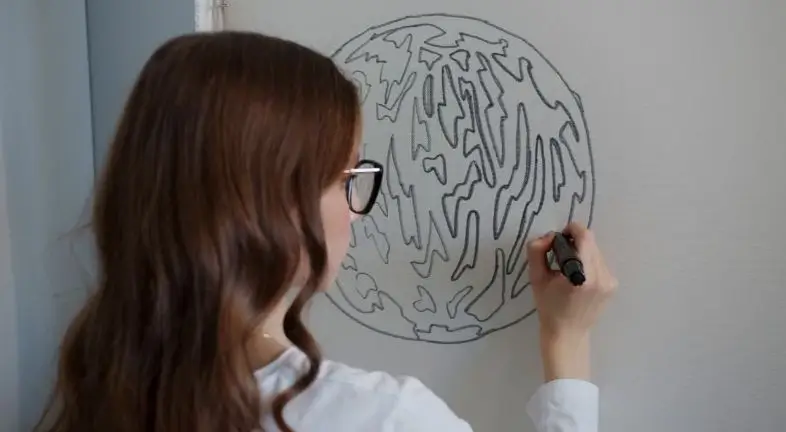
Design transfer for rug tufting is the step that decides how clean your final rug will look.
If your lines are off, your rug will be off. That’s why getting your design onto the fabric correctly matters before you start tufting.
Here’s how to do it properly, even as a beginner.
Step 1: Tighten Your Fabric First
Before you start design transfer for rug tufting, your fabric must be tight.
Press it with your hand.
If it moves, tighten it again.
Learn how to stretch tufting fabric step by step →
Step 2: Mirror Your Design
One of the most common mistakes in design transfer for rug tufting is forgetting to flip the design.
You work on the back of the fabric, so your design must be mirrored.
If you skip this:
- text will be backward
- logos will be reversed
What You Need for Design Transfer
Keep it simple:
- fabric marker or chalk
- ruler or measuring tape
- optional: projector
Method 1: Projector (Best Method for Design Transfer)
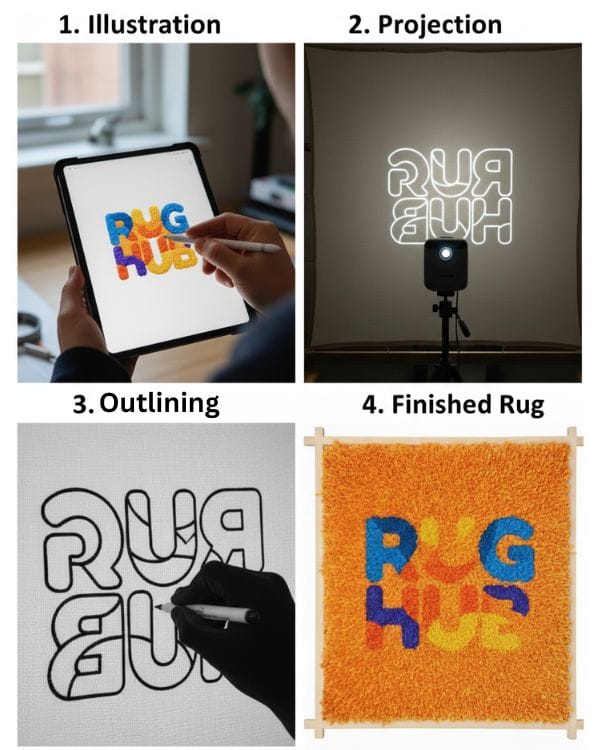
Using a projector is the fastest way to handle design transfer for rug tufting.
(A projector works by displaying an image onto a surface, allowing you to trace accurately.)
Steps:
- project your design onto the fabric
- adjust the size to fit your frame
- trace the outlines
Use a measuring tape to confirm the size before tracing.
A small digital projector makes this process much faster and more accurate, especially for detailed designs.
See the projector I recommend here →
Method 2: Stencil or Tracing
This method works well for simple or repeating designs.
Steps:
- place stencil on fabric
- secure it with tape
- trace carefully
Use a ruler to keep spacing consistent.
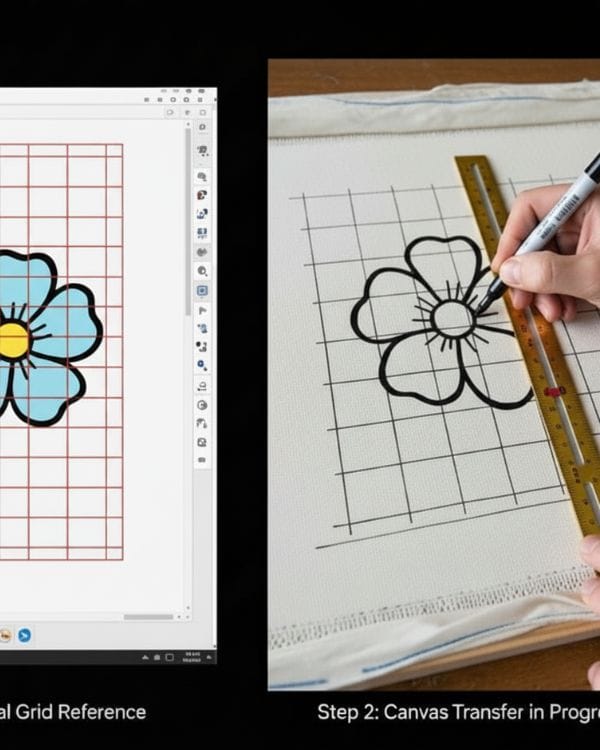
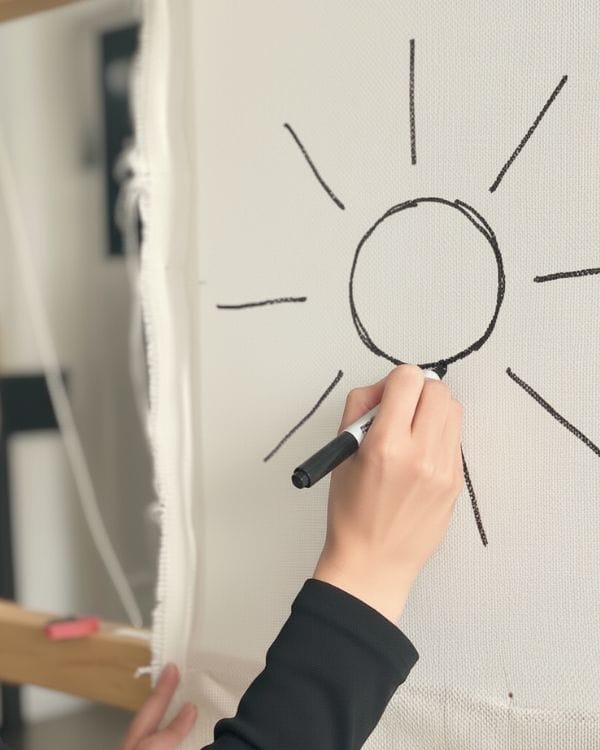
Method 3: Freehand Drawing
Freehand design transfer for rug tufting works best for:
- abstract designs
- simple shapes
Start light, then refine your lines.
Before You Start Tufting
Before tufting, double-check your design transfer:
- fabric is still tight
- lines are clean
- spacing is correct
Fix issues now, not after tufting.
Common Design Transfer Mistakes
Most issues in design transfer for rug tufting come from:
- loose fabric
- not mirroring the design
- rushing the tracing
These lead to uneven or distorted rugs.
Design Transfer for Rug Tufting: FAQ
Use permanent markers or chalk. Avoid water-based markers, they can bleed into yarn.
No, but it makes design transfer for rug tufting faster and more accurate.
Your finished rug will appear backward.
Final Tip
Take your time with design transfer for rug tufting.
Clean lines here will make the rest of the process much easier.
For the full step-by-step process, see the beginner rug tufting guide →
Want to keep building your tufting skills?
For more step-by-step instruction, explore this beginner-friendly tufting course with Trish Andersen →