
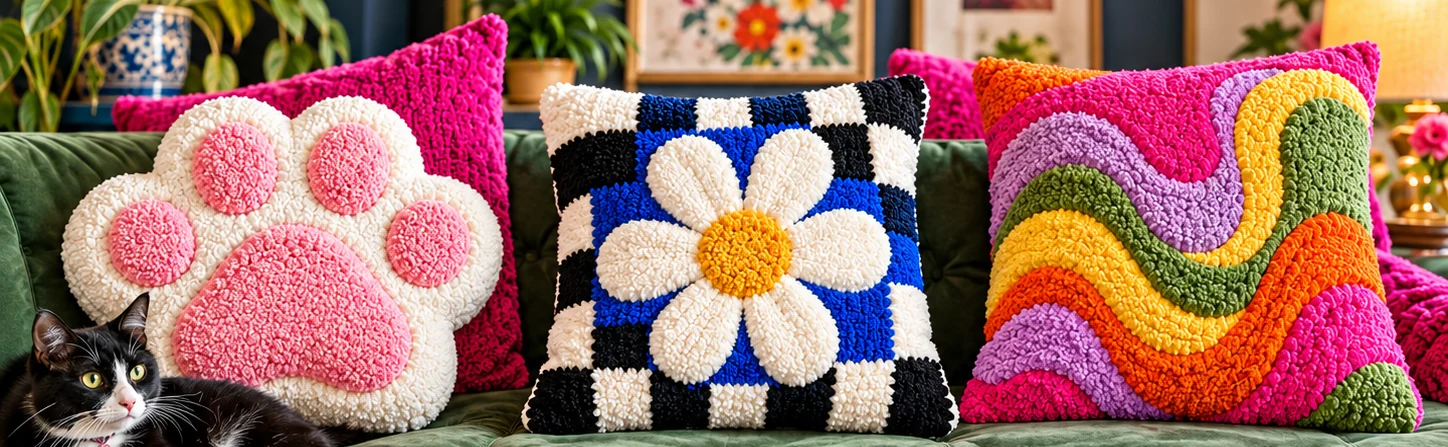
A fluffy cat paw, a bold checkerboard daisy, and colorful retro waves. Explore the designs, then get the matching printable line drawings and project-planning checklist by email.
Original digital concept images created for Rug Crafting Hub. These are not photographs of completed projects.
Tufted rugs have such irresistible texture that it is easy to imagine taking their bold shapes and colors onto a sofa. A tufted cushion is a smaller way to experiment with sculpted yarn, unusual silhouettes and vibrant palettes. The trick is to treat the tufted front as a textile component and think carefully about the softer pillow backing.
This collection has three different moods: a sweet cat paw pillow with raised pink pads, a graphic daisy cushion surrounded by checkerboard, and a retro wavy cushion that celebrates color. Below you'll find concept layouts, possible Red Heart Super Saver colors, materials and a realistic construction plan for exploring each design.
Get all 3 cushion design sheets
See the same cat paw, checkerboard daisy and retro-wave layouts shown in this article, plus the materials and planning checklist. Enter your email to receive the four-page PDF and five helpful follow-up emails about tufting.
Form not showing? Open the free design sheets signup form.
Cat Paw Tufted Cushion
The matching printable design
The cat paw outline with four round toe pads and a central pad, directly from the free printable PDF.
You'll receive this sheet as part of the four-page PDF, along with the other two layouts and a materials checklist.
Get the free printable pack →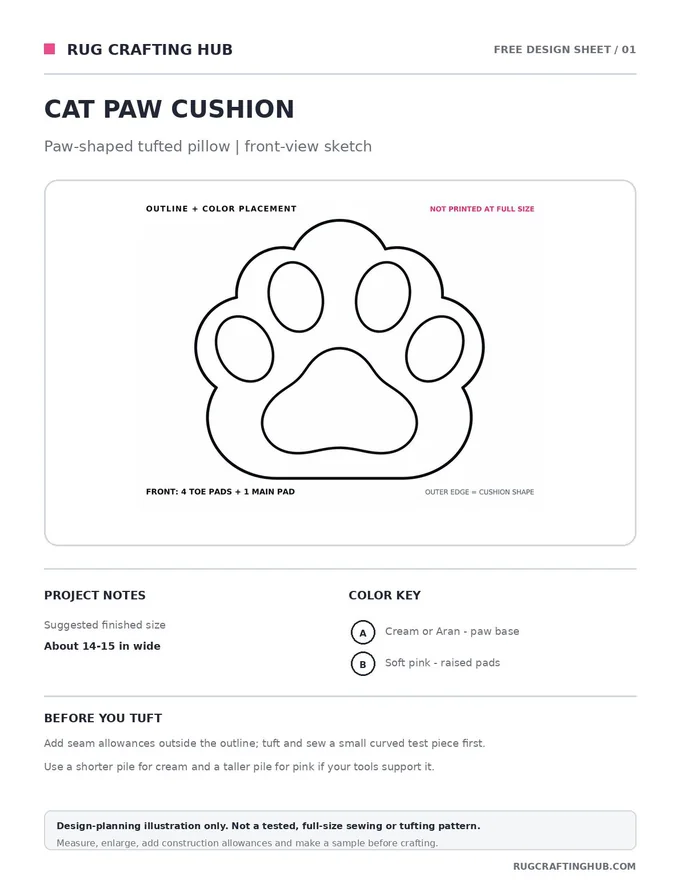
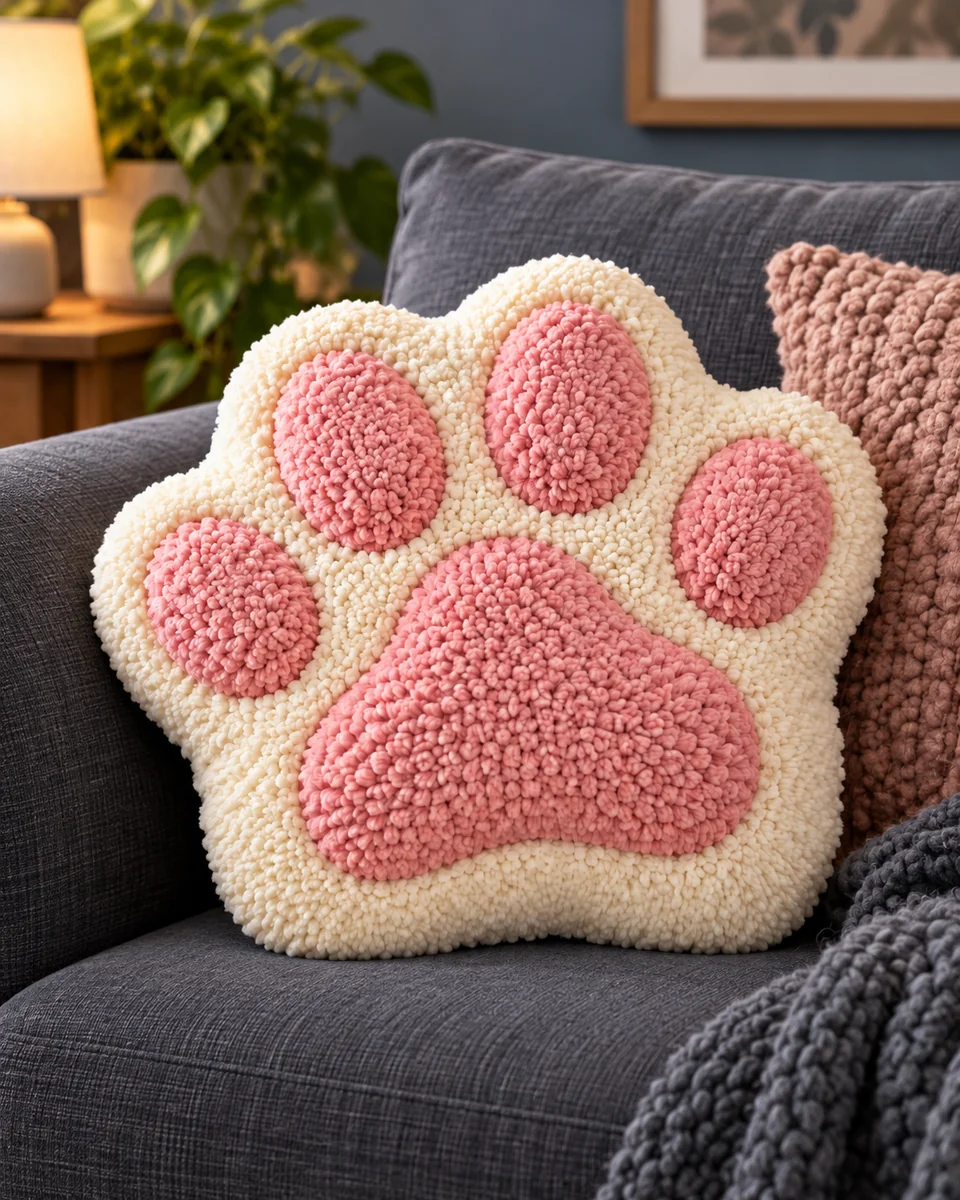
This is the cushion that makes people stop scrolling. It is clearly a cat paw from across the room, and the sculpted pads give it the tactile, squishy appearance of a plush toy without losing its identity as home decor.
Suggested Red Heart yarn colors
Dimension idea: Keep the cream foundation slightly shorter, then build the toe pads and main pad higher using a suitable adjustable tufting setup or careful carving. You want rounded, soft-looking pads rather than flat pink shapes.
Construction watch-out: A paw is not a rectangle. The curved edges and narrow spaces between toes need generous working fabric, careful edge finishing and a correctly shaped back panel. Practice on a small curved sample before committing to the final silhouette.
Checkerboard Daisy Tufted Cushion
The matching printable design
Checkerboard border and eight-petal daisy line map from the downloadable PDF.
You'll receive this sheet as part of the four-page PDF, along with the other two layouts and a materials checklist.
Get the free printable pack →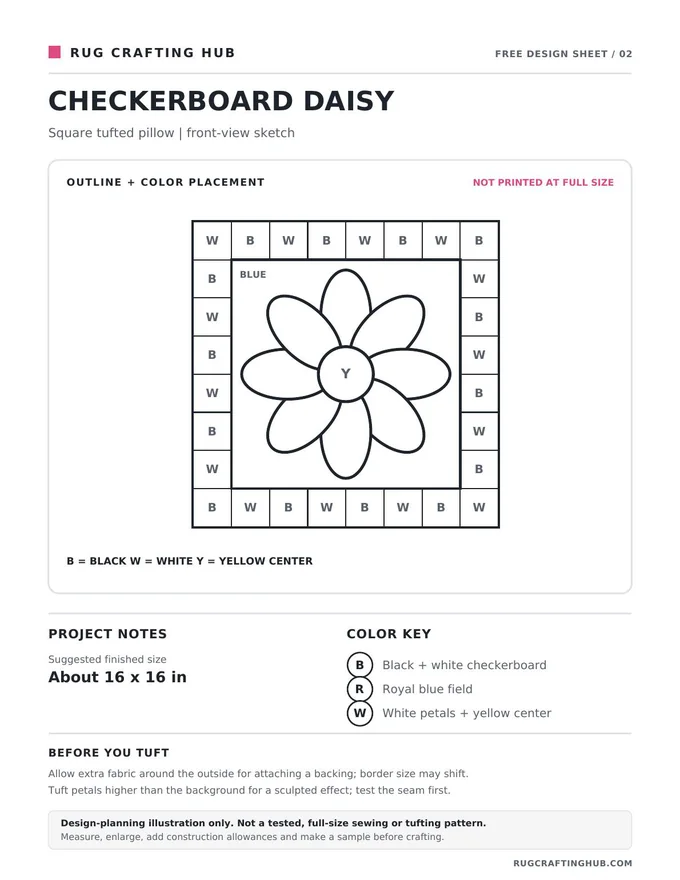
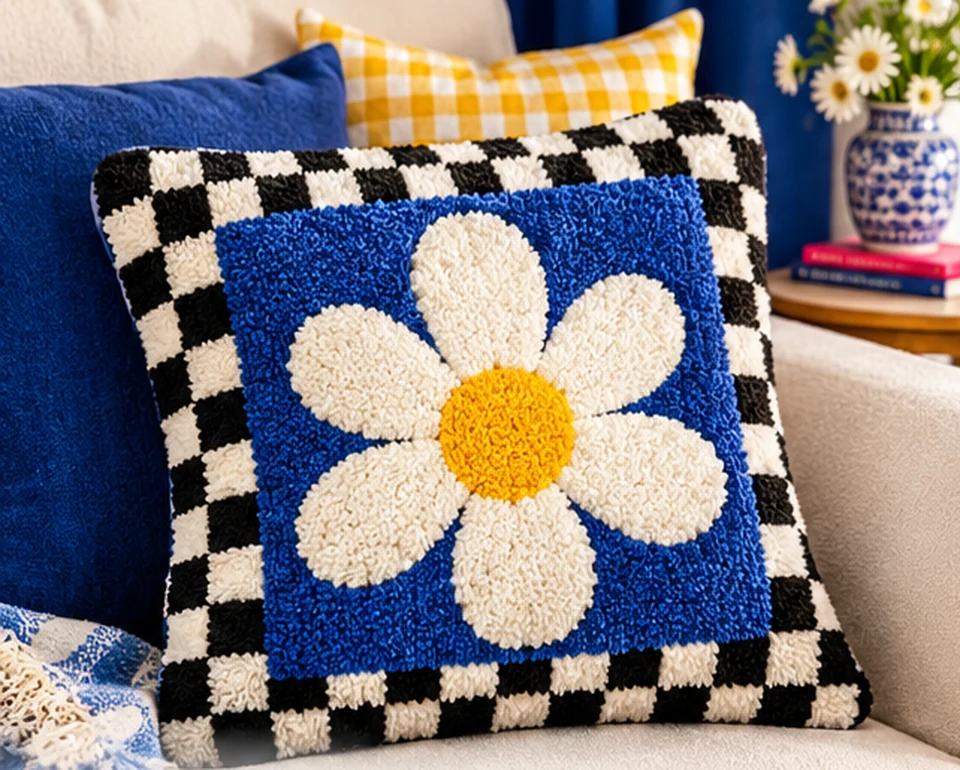
For a dramatic statement pillow, I love pairing an oversized white daisy with a bold checkerboard border. The royal blue background makes the white petals stand out, while the checks connect this design to our larger checkerboard furniture ideas.
Suggested Red Heart yarn colors
Dimension idea: Put the daisy petals at a slightly higher pile than the blue background, then gently shape the petal outlines. Leave the checkerboard relatively even to keep those graphic squares legible.
Construction watch-out: Checkers near corners can visually distort when the face panel is sewn and stuffed. Keep the outermost squares away from the exact seam line and plan a small visual border so the pattern doesn't disappear around the edge.
Retro Wavy Tufted Cushion
The matching printable design
Seven numbered flowing stripes as printed on the retro wavy cushion design sheet.
You'll receive this sheet as part of the four-page PDF, along with the other two layouts and a materials checklist.
Get the free printable pack →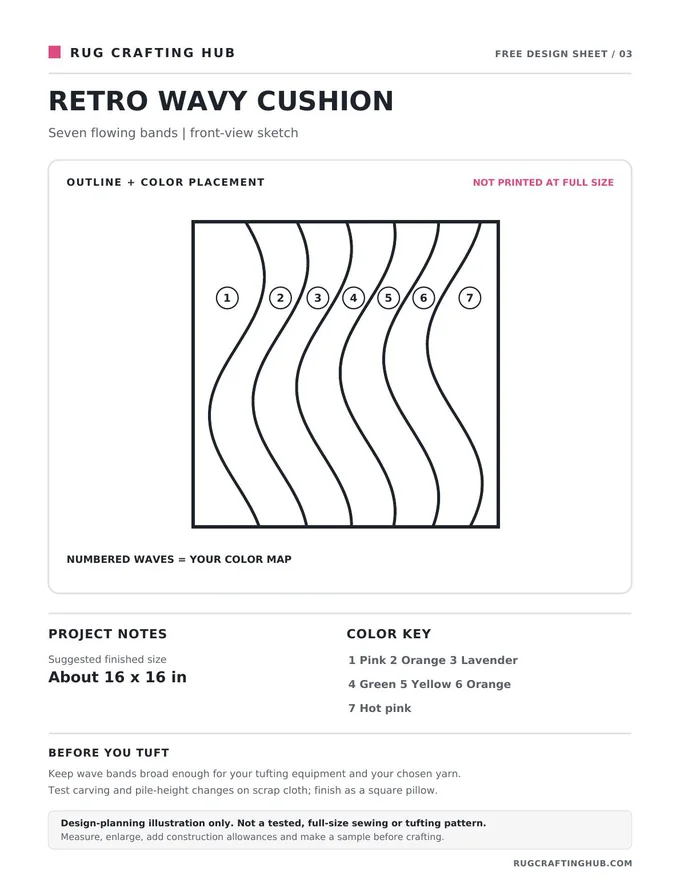
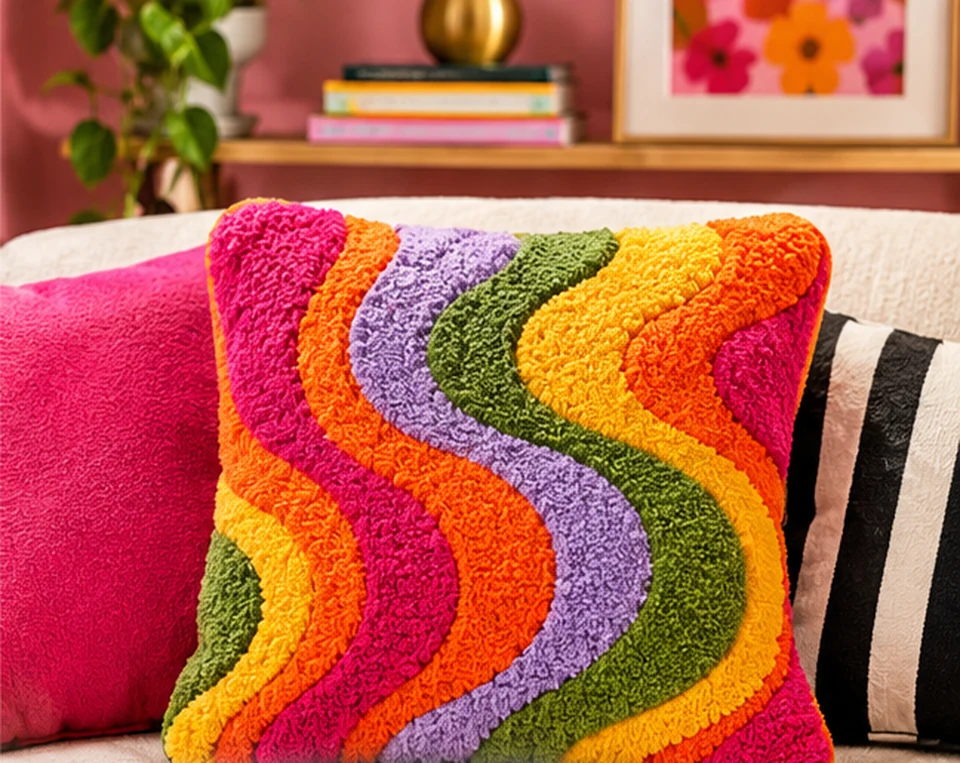
This one is all about rhythm. Hot pink, lavender, green, yellow and orange ripple across the cushion in broad bands, making it feel like a little piece of 1970s-inspired textile art.
Suggested Red Heart yarn colors
Dimension idea: Tuft the large color areas first. A small difference in pile height between neighboring waves creates shadows, but wild height jumps may feel uncomfortable when used as a pillow.
Construction watch-out: Keep the wave lines flowing through the whole surface and avoid trapping small slivers of color in the corners. The design should read from the other side of the room.
Affiliate disclosure: As an Amazon Associate I earn from qualifying purchases. #ad
Find the yarn colors for your cushion
I've collected a range of Red Heart yarn colors, including pinks, blues, neutrals, yellows and greens, in one Amazon Idea List. Use the color maps above and compare available shades with your printable design sheet before ordering.
Shop My Tufting Yarn & Color PicksThis is a curated shopping list, not a tested materials kit for these cushion designs. Check your tufting tool's yarn requirements.
Materials to Plan for These Tufted Cushion Projects
These are shared supplies across the collection. Final amounts depend on your chosen pillow size, tufting density and the yarn setup your machine supports.
Supply checklist
Need the tools to get started?
Browse my beginner tufting supplies Idea List for tools and materials to research, from frames and tufting equipment to other project essentials. Check compatibility and safety guidance before buying.
Shop My Beginner Tufting SuppliesSome items on this list are for rugs; cushion construction also needs a suitable flexible finish and fabric backing.
For all three designs, Red Heart Super Saver is a color-planning suggestion, not a guarantee of compatibility with a particular tufting gun. Check yarn thickness and strand recommendations for your machine and test a small patch. Colors and stock change, so confirm the actual skein shade before buying.
Some links above lead to my curated Amazon Idea Lists. As an Amazon Associate I earn from qualifying purchases. #ad
How You Could Turn a Tufted Design Into a Cushion
The basic idea is a tufted front plus a strong fabric back. Unlike a rug, a pillow must bend around stuffing or an insert, so glue thickness, seam placement and fabric flexibility matter. Here's a proposed construction workflow to test, not a proven tutorial for these three specific designs.
- Make a paper mockup. Choose a finished size; trace the paw outline or sketch the daisy and waves on a square. Mark the visible finished edge separately from your sewing allowance. For the two square pillows, use 40 × 40 cm as an initial finished-size target.
- Test your yarn and pile. Stretch a small piece of primary cloth on your frame and tuft two adjacent colors. Try a slightly raised section, check density and note how much the design contracts after finishing.
- Transfer the front design. Stretch the main primary cloth evenly. Remember that you generally work from the back of the finished tufted face, so reverse an asymmetrical template if required.
- Tuft outlines and fill areas. Create stable boundaries first, then fill the motifs. Keep enough breathing room around the edges for sewing; do not tuft into the planned seam allowance.
- Secure the back without making a hard shell. Use the adhesive recommended for your tufting setup, work in ventilation suitable for that product, keep the seam allowance manageable, and let the adhesive cure fully. Too much stiff glue can make pillow assembly difficult.
- Trim and define the texture. Gently carve edges between colors. On the cat paw and daisy, check whether the taller motifs stay soft and recognizable. Avoid aggressive trimming near the primary cloth.
- Prepare a separate fabric back. Cut a strong backing panel to match your tested finished outline, allowing for its seams and any closure. An envelope back may be easier on a simple square; a shaped paw may need a planned opening or zipper.
- Join and insert the pillow. Finish fray-prone raw cloth edges, place the right sides together and sew through the supported edge, not through a thick mass of tufting or cured adhesive. Turn, insert filling, close and check the final shape and seams.
Why the backing method matters
A tufted pillow needs sufficient untreated primary cloth at the seams, an appropriately flexible finish and a strong woven fabric backing. Start with a small sample, then assess comfort, seam strength and shedding before attempting the entire pillow.
Which Design Should You Try First?
Most approachable layout
Retro Wavy Cushion. It has a regular square outline and large freeform color bands, though sewing and backing still need practice.
Most dramatic texture
Checkerboard Daisy. Its bold petals offer a great opportunity to experiment with dimension and carefully trimmed outlines.
Most unusual shape
Cat Paw Cushion. The cutest silhouette, but the curved sewing edge and shaped backing add extra complexity.
Most eye-catching palette
Retro Wavy Cushion. Its hot pink, orange, yellow, lavender and green make a strong statement in an otherwise calm room.
Frequently Asked Questions
Can a tufted rug really be turned into a cushion?
Yes, makers have sewn tufted faces into decorative cushions. The main issue is handling the glue layer and the tufted edge so the front remains comfortable and can be sewn securely to a backing fabric. Test on a small piece first.
Can I use Red Heart Super Saver in a tufting gun?
It may work in some guns when threaded appropriately, but compatibility depends on machine, needle, yarn strand count and desired density. Make a small sample following your gun's yarn recommendations before buying the full palette.
Is a tufted cushion beginner-friendly?
Learning tufting and sewing at the same time adds complexity. A simple rectangular or square tufted front is generally a better first prototype than a detailed shaped paw.
How do I make a daisy look raised?
Plan a higher pile for the petals than for the background, and define the shape with careful trimming. Exact settings vary by tool and must be tested before committing to a full cushion.
What do I receive in the free download?
A four-page PDF: matching cat paw, checkerboard daisy and seven-band retro-wave outline/color sheets, plus a printable materials and planning checklist. These are design-planning illustrations, not full-size or physically tested tufting and sewing patterns. You'll need to scale and test any project before cutting.
Want the printable versions?
Get the original line drawings for all three cushion concepts plus the planning checklist. They'll arrive by email, so you can keep the shapes and color maps handy for a future project.
Send Me the Free Design SheetsKeep Exploring
Have you tried turning a tufted textile into a pillow? Your sample notes and feedback can help shape a tested version of these ideas.