
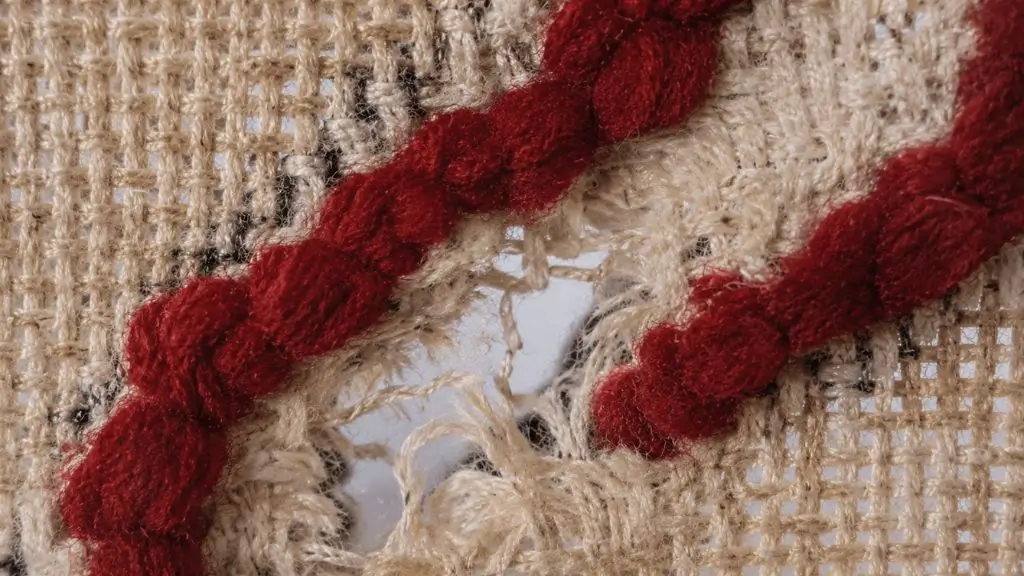
Is your tufting gun tearing the cloth? Take a breath, you’re definitely not alone. This is one of the most common beginner tufting problems, and the good news is that it usually comes down to a few easy fixes, not a ruined project. If you’re just starting out, see my Complete Beginner’s Guide to Rug Tufting first →
Most of the time, the issue is that the cloth isn’t stretched tightly enough, or the needle on the tufting gun is dull or damaged. Once you get those basics right, tufting usually becomes a lot smoother and less frustrating.
Why does my tufting cloth rip?
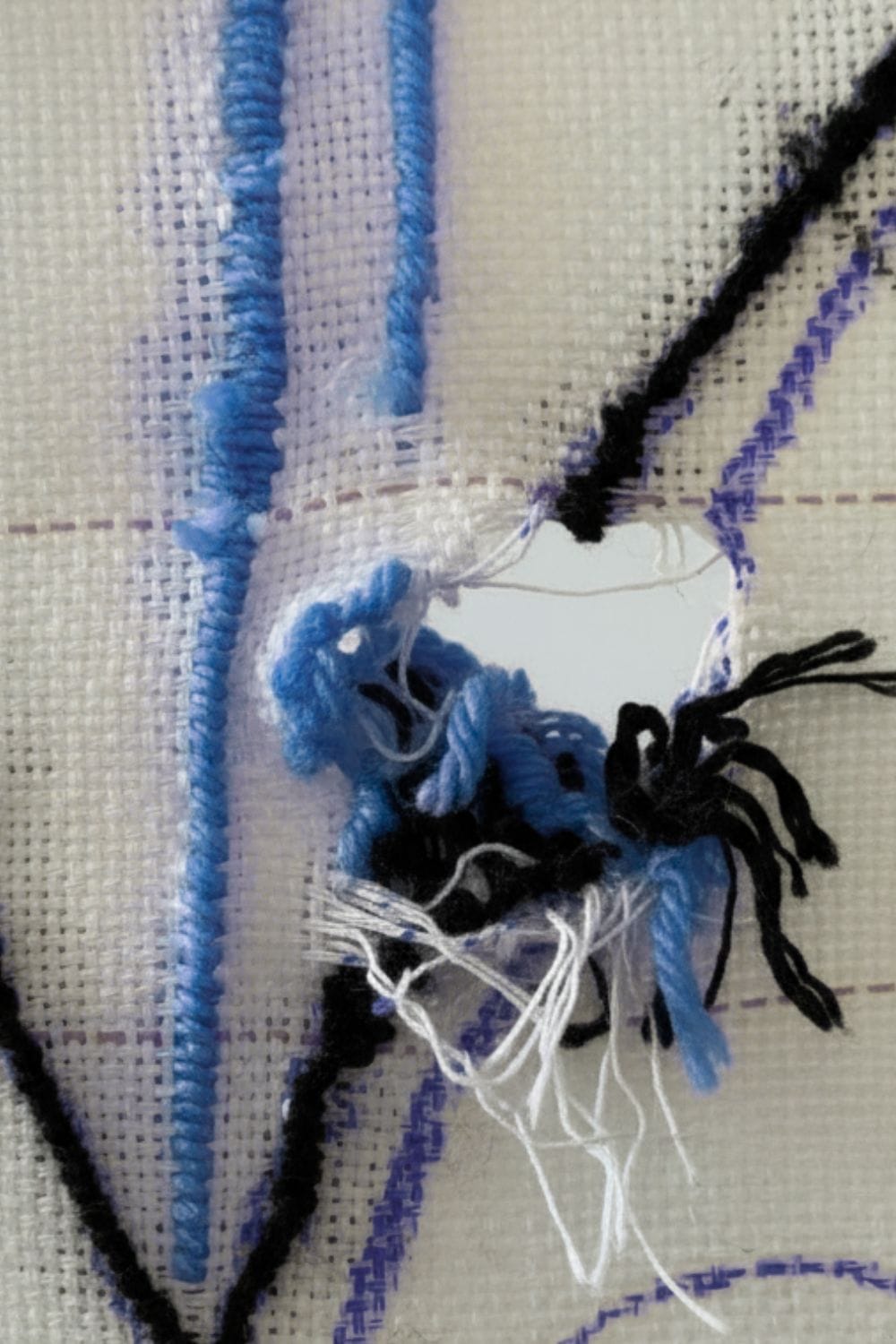
Tufting cloth rips when the fabric can’t handle the pressure from the gun or when the setup isn’t quite right. Loose cloth, uneven tension, moving too fast, or using the wrong fabric can all cause tears.
In a lot of cases, the problem isn’t your technique, it’s the way the cloth is set up on the frame. If the fabric sags while you’re tufting, the gun has more room to snag and pull at the weave.
1. Stretch the cloth tighter
If your cloth is loose, that’s usually the first thing to fix. Tufting cloth needs to be pulled very tight so it stays firm while you work. If it feels soft, wavy, or saggy, it’s much more likely to tear. See my complete guide to stretching fabric on a tufting frame correctly →
This is why a sturdy tufting frame matters so much. A good frame helps keep the cloth tight and steady, which makes tufting much easier and helps prevent ripping.
2. Check the needle
A dull or damaged needle can tear the cloth even if everything else looks fine. If the needle is bent, worn down, or rough, it may drag through the fabric instead of passing through it cleanly.
It’s a good habit to check the needle before starting a project, especially if your gun has already been used a lot. Sometimes a small needle issue can cause a lot of unnecessary frustration.
3. Slow down a little
A lot of beginners move the gun too fast at first. That can make it harder to control, and it can put too much pressure on one area of the cloth.
Try slowing down and making smoother, more even passes. You do not need to rush. Tufting usually goes better when your movements are steady and controlled.
4. Keep your pressure even
The gun needs to stay in contact with the cloth, but you do not want to force it. Too much pressure can strain the fabric, while too little pressure can make the gun bounce around.
Try to let the gun do the work. Your job is really just to guide it evenly across the cloth without pushing too hard or pulling away too quickly.
5. Use the right tufting cloth
Not every fabric is made for tufting. If the cloth is too weak or not designed for a tufting gun, it can rip much more easily.
That’s why primary tufting cloth is such a smart choice. See my complete guide to choosing the right tufting cloth →
How to stop your tufting gun tearing the cloth
The easiest way to avoid tearing is to make your setup part of the process every time. Make sure your cloth is stretched tightly, your frame is stable, your needle is in good shape, and your gun speed matches your comfort level.
If the cloth starts losing tension while you’re working, stop and tighten it again before moving forward. That small step can save you from a bigger tear later.
Watch how to repair a tufting cloth tear before it spreads:

FAQ
Most of the time, it’s because the cloth is too loose or the needle is catching the weave. Starting with tighter tension usually helps right away.
Yes, it can. A dull or damaged needle may snag the fabric instead of moving through it smoothly.
Primary tufting cloth is usually the best option because it’s made for tufting and holds up better under pressure. For a full breakdown of everything beginners need see my Complete Beginner’s Guide →
Final thoughts
If your tufting gun is tearing the cloth, don’t get discouraged. In most cases, the fix is simple: tighten the cloth, check the needle, slow down a bit, and make sure you’re using the right fabric.
And if you want a smoother setup from the start, a sturdy tufting frame and good primary tufting cloth can make a big difference. New to tufting? Start with my Complete Beginner’s Guide to Rug Tufting →