
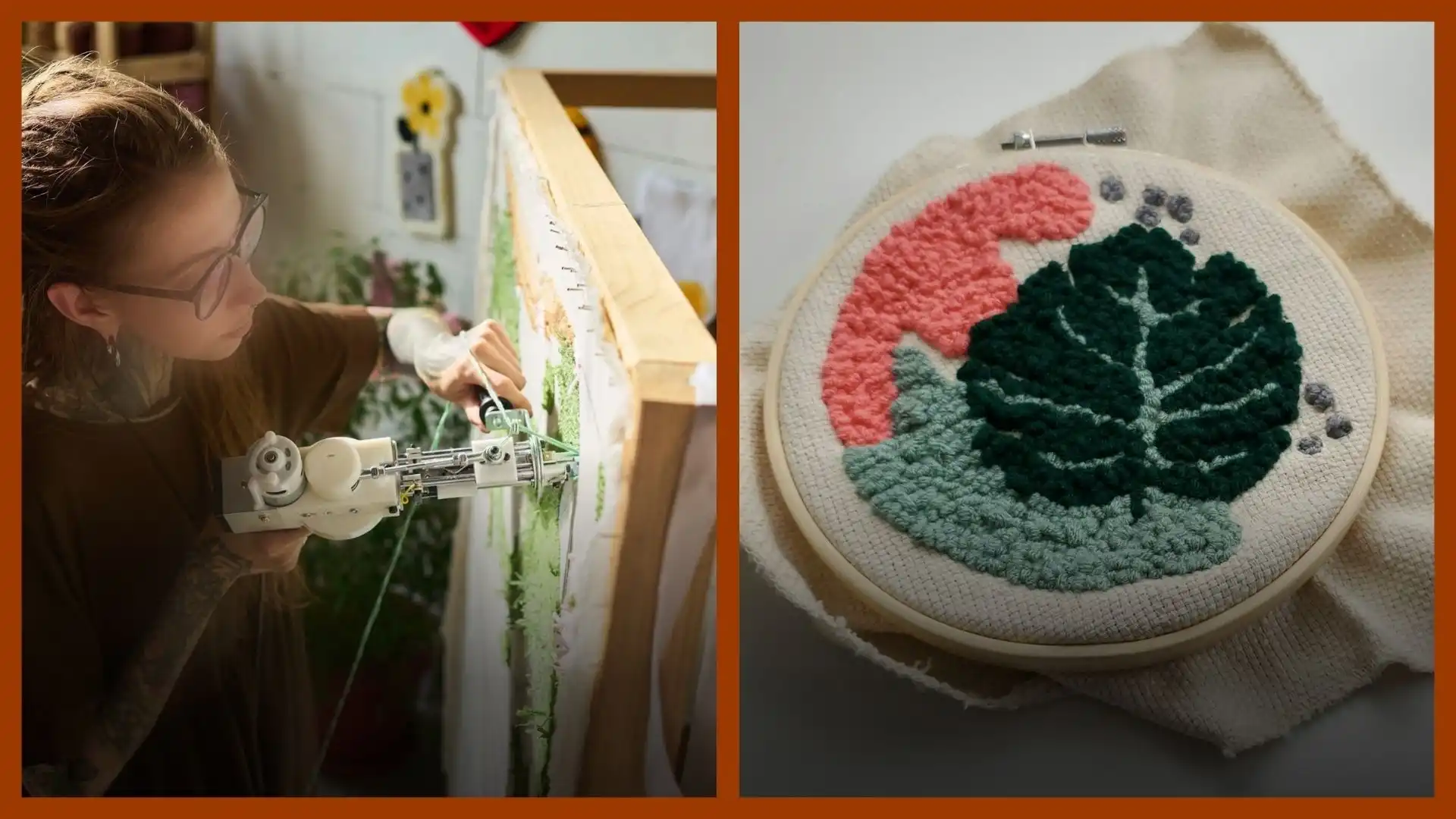
So you’ve fallen down the fiber art rabbit hole. Whether you discovered rug tufting through a satisfying YouTube video or stumbled across punch needle on Pinterest, you’re now asking the same question every beginner asks: rug tufting vs punch needle, which one do I actually start with?
Both crafts create gorgeous textured pieces. Both use yarn pushed through fabric. And both have passionate communities that will tell you theirs is the better one. But they are genuinely different in cost, tools, scale, and the kind of maker experience they offer – and the right choice depends on your situation.
I’ve worked with both techniques, and in this guide I’m breaking down everything you need to know to make a confident decision.
What Is Rug Tufting?
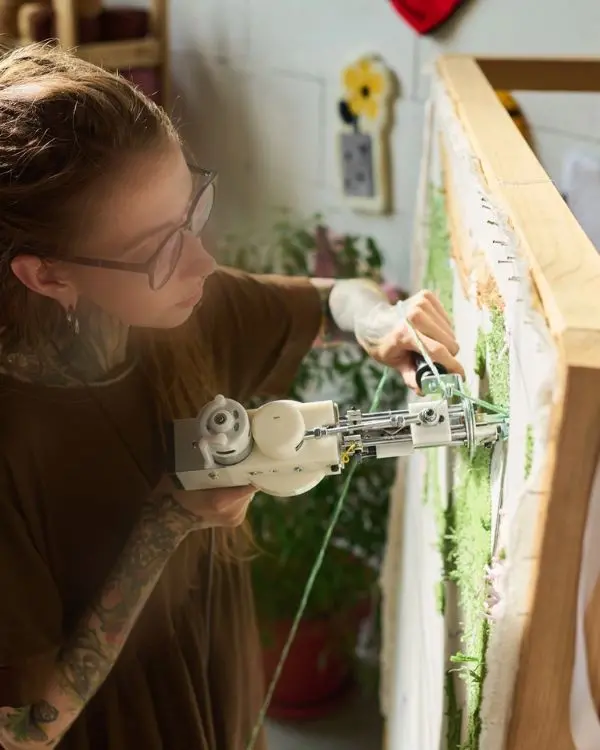
Rug tufting is a method of making rugs and wall art using a tufting gun – an electric handheld device that shoots yarn through a stretched backing fabric. The result is a looped or cut pile surface that looks and feels like a professional rug.
The tufting gun does the heavy lifting. You guide it across your design and it punches the yarn through automatically, row by row.
What you need to get started:
- A tufting gun (cut pile, loop pile, or 2-in-1)
- A tufting frame to stretch your fabric
- Primary tufting cloth (monk’s cloth or primary backing)
- Yarn – usually acrylic or wool
- Carpet adhesive/glue for finishing
- Secondary backing fabric
- A rug shearing tool for finishing the pile
See my full Beginner’s Guide to Rug Tufting for the complete step-by-step process.
Typical startup cost: $250-$450 for a full beginner setup (kit + separate frame)
What Is Punch Needle?
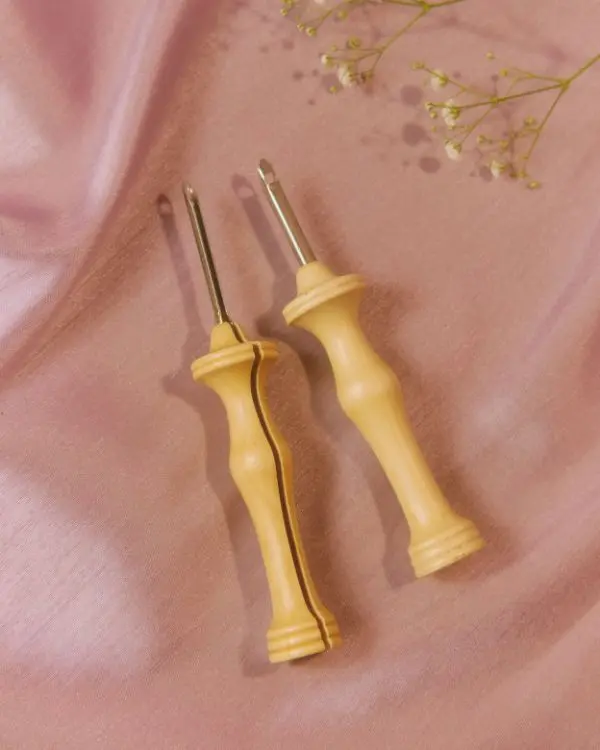
Punch needle is a hand-powered fiber art technique. You use a hollow needle tool held like a pen to push yarn through stretched fabric, creating loops on the surface one stitch at a time. No electricity required.
The motion is rhythmic and meditative. You work from the back of the fabric and the loops pop through to the front as you push the needle in and pull it along. It’s slower than tufting but quieter, more portable, and far less expensive to start.
What you need to get started:
- A punch needle tool (adjustable is best for beginners)
- A hoop or small frame to keep fabric taut
- Monk’s cloth or weaver’s cloth
- Yarn or embroidery thread depending on needle size
- A threader (usually included in kits)
Typical startup cost: $30-$80 for a beginner kit
Rug Tufting vs Punch Needle: The Key Differences
| Rug Tufting | Punch Needle | |
|---|---|---|
| Tool | Electric tufting gun | Hand-held needle tool |
| Speed | Fast – large areas quickly | Slow – one stitch at a time |
| Startup Cost | $250-$450 (kit + separate frame) | $30-$100 |
| Workspace Needed | Larger – frame takes space | Small – hoop fits on your lap |
| Noise Level | Loud (electric motor) | Silent |
| Best Project Size | Large rugs, wall art | Small-to-medium pieces, cushions, hoops |
| Learning Curve | Moderate | Gentle – very beginner friendly |
| Finish Required | Yes – gluing and backing | Minimal |
| Portability | No – needs a plugged-in setup | Yes – take it anywhere |
Which Tools Are Recommended for Beginners?
Rug Tufting Tools for Beginners
The most important purchase is your tufting gun. A 2-in-1 cut and loop pile gun gives you flexibility as a beginner without needing two separate machines.
The BESGEER Tufting Gun Kit is one of the best all-in-one starter options available right now. It includes a 2-in-1 cut and loop pile tufting gun, primary tufting cloth, carpet trimmer, 20 colors of acrylic yarn, and all the accessories you need to get started. Perfect if you want everything in one box without hunting down individual tools.
View BESGEER Tufting Gun Kit on Amazon
Note: This kit does not include a tufting frame – you’ll need to purchase one separately. See my complete tufting frames guide to find the right size for your setup.
For yarn, start with acrylic worsted weight. It’s affordable, widely available, and works well in tufting guns. Once you’re comfortable, wool gives you a more durable result.
See my full Rug Tufting Tools Guide for recommendations across every budget.
Punch Needle Tools for Beginners
A beginner kit that includes everything in one box is the easiest way to start – fabric, needle, hoop, yarn, and instructions with no extra sourcing required.
If you already do embroidery, you may already own one of the most important punch needle tools, a hoop to keep your fabric taut while you work.
Many beginner punch needle projects use the same wooden or plastic embroidery hoops found in traditional embroidery kits, making punch needle an affordable craft to try without investing in a lot of new equipment.
Look for kits that include:
- Pre-printed pattern on monk’s cloth
- An adjustable punch needle
- A wooden or plastic hoop
- Enough yarn to complete the project
If you want a tool that will last years, the Oxford Punch Needle (sizes #8-#14) is the professional standard used by serious fiber artists. Pair it with monk’s cloth and your own yarn and it’s a setup that grows with you.
What Are the Main Differences in the Finished Product?
Rug tufting produces a dense plush pile that can be sculpted and sheared to different heights. You can create a flat surface, a carved 3D design, or a combination of textures. It’s durable enough for floor use and is the standard method for custom rugs.
Punch needle creates loops that sit flush against each other in a slightly flatter profile. It’s excellent for wall hangings, cushion covers, decorative hoops, and small accent rugs – but for floor rugs that will take real foot traffic, tufting is the more durable option.
Popular Brands to Know
Rug Tufting Brands
- AK Tufting – popular tufting guns, widely used by beginners
- BESGEER – well-rated beginner kits with everything included
- All Things EFFY – premium tufting guns and supplies, known in the rug tufting community for quality tools
- Tuft Love – popular in the North American tufting community
Punch Needle Brands
- Oxford Punch Needle – the professional standard, invented by Amy Oxford
- Pllieay – affordable adjustable needles popular on Amazon
- DMC – well-known brand with beginner-friendly punch needle kits
- SPINNY – popular coaster kits great for absolute beginners
Which One Should You Choose?
Choose punch needle if:
- You’re brand new to fiber arts and want to try it before committing
- You have a budget under $100
- You want something quiet you can do on the couch
- You’re interested in smaller decorative pieces – wall art, cushions, gifts
- You don’t have dedicated workspace
Choose rug tufting if:
- You’re ready to commit and want professional-looking results faster
- You want to make full-size rugs
- You have a workspace you can set up and leave
- You’re interested in eventually selling your work (tufted rugs command much higher prices)
- You’ve already tried punch needle and want to level up
The secret most crafters don’t tell you: a lot of people start with punch needle specifically because it’s low-cost and low-commitment, then upgrade to rug tufting once they know they love the craft. It’s actually a great progression path.
Can You Do Both?
Absolutely, and many makers do. The skills transfer well, understanding pile height, yarn density, and design planning applies to both. Just note that the backing fabrics are different: rug tufting requires primary tufting cloth, while punch needle uses monk’s cloth. They are not interchangeable. See my full breakdown in Primary Tufting Cloth vs Monk’s Cloth if you want to understand why.
Some tufters use punch needle for detail work or small accent areas within a larger tufted piece. Others keep punch needle as their travel craft and tufting for the studio. There’s no rule that says you have to choose just one.
Frequently Asked Questions
Rug tufting has a steeper learning curve because the gun requires practice to control speed and angle consistently. Punch needle is easier for absolute beginners since mistakes are simple to pull out and redo.
Yes, but they’re best suited as small accent rugs or decorative pieces rather than high-traffic floor rugs. For durable floor rugs, rug tufting is the better technique.
A punch needle coaster or small hoop project takes 1-4 hours. A beginner tufted rug (24″x24″) typically takes a weekend including setup, tufting, and finishing.
Yes – custom tufted rugs can sell for $150-$600+ depending on size and complexity. See my full guide on how to start a tufted rug business if this interests you.
Worsted weight acrylic works for both techniques. Wool is ideal for tufted floor rugs due to durability. Embroidery thread is common for fine punch needle work on smaller pieces.
Ready to Start?
If punch needle is your starting point, grab a beginner kit and you can be creating your first piece tonight.
If you’re ready to jump straight into rug tufting:
- Read the Complete Beginner’s Guide to Rug Tufting
- Shop the BESGEER Tufting Gun Kit on Amazon
- Browse the Full Tufting Equipment Collection
And if you want to learn from a professional, the Trish Andersen Tufting Course on Domestika is my top recommendation for taking your tufting from beginner to confident maker.